Pool Heater & Heat Pump Service in Melbourne: Diagnostics, Flow Errors & Settings
Melbourne pool heater diagnostics, setup and service
Pool heater faults checked before costly replacement
Litra PoolCare checks the pool-side causes that often make heaters and heat pumps fault:
water flow, filter load, bypass position, pump speed, controller settings, airflow, drainage and access.
The aim is to confirm whether the problem is setup, circulation, repair, replacement or licensed trade work.
Service focus: find the cause before replacing the unit.Many heating faults come from filter restriction, bypass balance, pump scheduling or heat pump airflow — not from the heater alone.
What this service is for
Pool heaters and heat pumps that are slow, unreliable, showing low-flow errors, short-cycling, defrosting too often or only running on high pump speed.
What is checked first
Filtration, baskets, pump speed, valves, bypass, visible pipework, airflow, controller settings, drainage and model details before parts are recommended.
When replacement is better
Replacement may be more sensible when the heater is old, undersized, badly corroded, repeatedly faulting or no longer economical to service.
Replacement option
Need heater or heat pump replacement instead?
If the unit is near end of life, undersized for the pool, repeatedly faulting or not worth repairing,
use the dedicated replacement page. A replacement quote should still consider pool volume, airflow, available space,
pipework, power requirements and the owner’s heating expectations.
A pool heater depends on the whole equipment bay. Before treating a fault as a failed heater,
the water side of the system should be checked: circulation, filtration, valve position, bypass balance,
controller settings and the conditions around the heater or heat pump.
Heat pumps
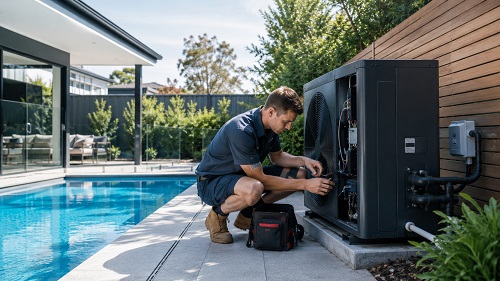
Checks include water flow, airflow around the cabinet, intake and exhaust clearance, condensate drainage,
controller settings, defrost behaviour and whether the installation position is restricting performance.
Gas and electric pool heaters
Pool-side checks focus on flow proving, visible plumbing, bypass position, controls and operating symptoms.
Gas work, hard-wired electrical work and internal heater repairs must be handled by the appropriate licensed trade where required.
Practical aim: separate serviceable setup issues from true heater failure, then decide whether the next step is adjustment,
repair assessment, replacement or a licensed electrician, gas technician or refrigeration specialist.
Service, repair, replacement or licensed specialist?
Decision path before spending on parts
Best next step by situation
Path
When it makes sense
What to confirm first
Service and setup correction
The heater runs, but faults after filter loading, timer changes, low pump speed or cool damp conditions.
Filter condition, baskets, pump speed during heating, bypass position, airflow clearance, drainage and timer alignment.
Repair assessment
There is a clear fault code, visible leak, intermittent start issue, failed reading or repeated shutdown.
Model, age, exact error, parts availability, service history and whether the unit is still economical to repair.
Full heater or heat pump replacement
The unit is old, corroded, undersized, repeatedly faulting or no longer matched to how the pool is used.
Pool volume, heating goal, pipe layout, space, airflow, drainage, electrical requirements and budget.
Licensed trade support
The issue involves switchboard faults, hard-wired electrical work, gas components, refrigerant-side faults or internal manufacturer repairs.
Whether pool-side flow, filter, valves, controls and airflow are stable before specialist trade work is booked.
Important service boundary
Litra PoolCare can assess pool-side symptoms, visible equipment issues and setup causes. Electrical supply faults,
switchboard issues, hard-wired wiring, gas work and refrigeration-side heat pump faults may require a licensed electrician,
licensed gas technician or refrigeration specialist.
Common symptoms and likely causes
What owners usually notice first
Low-flow error
Often starts with a loaded filter, low pump speed, air in the pump basket, suction restriction or bypass set too far open.
Slow heat-up
Slow heating may be caused by a fault, but also by pool volume, wind, cool nights, no pool cover, short runtime or an unrealistic temperature target.
Works on high speed only
The pool may circulate on low speed, but the heater may still need a higher minimum flow. A dedicated heating RPM may be needed.
Short-cycling or repeated shutdown
Repeated start-stop behaviour can come from unstable flow, blocked airflow, poor bypass balance, temperature sensor issues or schedule conflicts.
What is checked on site
A clear diagnostic sequence
The check starts with the operating conditions that allow a heater to run: clean filtration, stable circulation,
sensible valve positions, enough air around the unit and settings that match the pump schedule.
On-site checks
Check
Why it matters
Common issue found
Filter and circulation condition
The heater needs enough water moving through it before it can run safely and consistently.
Loaded filter, full baskets, air in the pump, suction restriction or low water level.
Variable-speed pump setting
Energy-saving speeds can be too low for heating even when normal filtration looks acceptable.
Eco speed used during a heat call, no dedicated heating speed or a speed change during the heating window.
Bypass and valve position
Too much bypass can starve the heater; poor balance can create intermittent flow trips.
Bypass moved after service, return valves partly closed or flow split not suited to heating.
Heat pump airflow and drainage
Heat pumps need clear intake and exhaust air, plus drainage that keeps the base area dry.
Fence or shrubs too close, debris near the coil, cold exhaust recirculation or damp base area.
Controller and timer settings
Heating only works when the heater call, pump runtime and pump speed line up.
A wrong reading can make the heater stop early, run at the wrong time or appear inconsistent.
Sensor drift, intermittent reading, poor connection or sensor placement issue.
Why this order matters: if water flow, airflow or scheduling is unstable, new parts can still fault.
The first step is to confirm the heater is being given the conditions it needs to operate.
Melbourne conditions that affect pool heating
Local operating factors
Cool nights and shoulder seasons
Spring and autumn heating can feel inconsistent because the pool loses heat overnight. Runtime, cover use and setpoint discipline often matter as much as the unit.
Wind and uncovered water
Open pool areas lose heat quickly. If the pool is uncovered, a working heater can still struggle to recover temperature inside a short daily window.
Storm debris and loaded filters
After rain, wind and leaf drop, baskets and filters can load quickly. The heater may then show low-flow faults even though the heater has not changed.
Tight equipment bays
Fences, walls, shrubs, chemical storage and poor access can reduce airflow, speed up corrosion and make future service harder.
Low-flow and high-speed-only heating faults
Flow faults explained simply
A pool can look like it is circulating normally while still failing the heater’s minimum flow requirement.
This is common with variable-speed pumps because the speed that saves energy may not be the speed the heater needs.
Flow fault causes and first checks
Trigger
What happens
First correction to test
Dirty or loaded filter
Water movement drops and the heater protects itself with a flow fault.
Clean or backwash as appropriate, clear baskets, then re-test heating at the normal pump speed.
Pump speed too low
The pool may skim and circulate, but the heater still does not receive enough flow.
Set a dedicated heating speed and confirm the heater runs without tripping.
Bypass out of balance
Too much water avoids the heater, or the heater loop becomes unstable.
Rebalance bypass and valves, then check returns and skimming remain acceptable.
Air entering the system
Bubbles and unstable prime can cause intermittent heater faults.
Check water level, skimmer, pump lid O-ring, unions, baskets and visible suction-side leaks.
Schedule mismatch
The heater calls for heat while the pump is off, too slow or outside the right timer window.
Match heater enable time with pump runtime and the confirmed heating speed.
Useful rule
If the heater works on high speed but faults on low or eco speed, check pump speed, filter condition and bypass position before assuming the heater has failed.
Slow heat-up: fault, sizing issue or normal heat loss?
Sizing, runtime and heat loss
Slow heating should be assessed against pool volume, target temperature, weather, cover use and available runtime.
A heater can be working correctly and still feel slow if the site is losing heat faster than expected.
What affects heating speed
Factor
Why it matters
Practical takeaway
Pool volume
More water needs more energy and more time to lift temperature.
Confirm approximate litres before judging the heater as weak.
Pool cover use
Uncovered pools lose heat quickly, especially overnight and in wind.
A cover often changes slow recovery into stable temperature holding.
Runtime window
A short heating window may not catch up after cool nights or heavy use.
Longer, consistent runtime can be more effective than constant setpoint changes.
Target temperature
Higher targets increase heat loss and make recovery slower.
A small target reduction can improve stability and running cost.
Air temperature and humidity
Heat pump performance changes with ambient conditions, especially in cool damp weather.
Defrost and slower recovery can be expected in some shoulder-season conditions.
Common field mistake
Replacing a heater when the real problem is an uncovered, exposed pool running on a short schedule.
The replacement unit still needs suitable flow, enough runtime and heat-loss control.
Heat pump airflow, defrost and drainage
Preventing avoidable heat pump problems
Heat pumps need air movement as much as water movement. A unit placed too close to fencing, shrubs, walls or stored chemicals
can lose efficiency, defrost more often, corrode faster or become difficult to service.
Keep intake and exhaust paths clear: avoid cold exhaust air being pulled back into the unit.
Control debris: leaves, dust and garden matter around the coil reduce airflow and heat transfer.
Manage drainage: condensate should drain away so the unit does not sit in persistent moisture.
Keep chemicals away: acid and chlorine fumes near the cabinet can accelerate corrosion.
Allow service access: the unit should not be boxed into a corner that makes future inspection difficult.
Defrost note: defrost can be normal in cool, damp conditions. It becomes a service concern when it is excessive,
linked with blocked airflow, debris on the coil, drainage problems or a tight installation.
Controller settings and heating schedule setup
Settings that prevent avoidable lockouts
Many heating issues come from settings that do not match the equipment. A heater can only operate when the pump is running
at a speed that gives enough water flow. If automation lowers pump speed during the heating window, the unit may stop or fault.
1
Confirm the heating window. Decide when heating should run and compare it with the pump schedule.
2
Confirm minimum heating speed. Variable-speed pumps may need a dedicated speed for heating, not only a low filtration speed.
3
Check setpoint behaviour. Constant large daily changes can make the system appear unreliable.
4
Re-test after filter cleaning or valve changes. Any change to restriction or bypass can change heater flow.
What to have ready before booking heater troubleshooting
Details that make diagnosis faster
The heater or heat pump brand and model, if visible on the label.
The exact fault text or error code shown on the controller screen.
Whether the issue is slow heating, low-flow fault, short-cycling, no start, defrost, noise or repeated shutdown.
Current pump schedule and variable-speed pump RPM used during heating.
Recent changes: filter clean, backwash, storm debris, valve adjustment, new cover, automation change or equipment replacement.
Your suburb and whether the heater works only on high pump speed.
Useful before the visit
If possible, have clear photos of the equipment area, controller screen, model label, pump, filter, valves and bypass ready.
These can be discussed after the initial call if needed.
Related pool equipment services
Internal service links
Heating problems often overlap with pump speed, filtration, valves, visible plumbing and automation.
These related services help separate heater service from broader equipment work.
The heater is not seeing enough water movement. Common causes include a loaded filter, low pump speed,
air entering the pump, a bypass valve set incorrectly or automation reducing pump speed during the heating window.
Why does the heat pump work on high speed but fail on low speed?+
Low speed may be enough for general circulation but not enough for heating. The usual first checks are filter load,
bypass position and the minimum pump RPM required while the heater is enabled.
Is slow heating always a sign that the heater is broken?+
No. Slow heating can also come from large pool volume, short runtime, cool nights, wind, no pool cover,
high target temperature or a heater that is undersized for the owner’s expectations.
Why does my heat pump keep defrosting?+
Defrost can be normal in cool and damp weather. If it happens too often, airflow clearance, coil debris,
cold exhaust recirculation and drainage around the heat pump should be checked.
Can valve changes cause heater faults?+
Yes. Small changes to bypass, return or suction valves can reduce heater flow enough to trigger faults,
especially when a variable-speed pump is running near the minimum heating speed.
When is replacement better than service?+
Replacement is usually better when the unit is old, repeatedly faulting, badly corroded, undersized,
expensive to keep repairing or no longer matched to how the pool owner wants to use the pool.
When do I need a licensed electrician, gas technician or refrigeration specialist?+
Licensed trade support may be required for switchboard faults, hard-wired electrical work, gas work,
refrigerant-side heat pump faults or internal repairs outside normal pool equipment service.
Book pool heater or heat pump troubleshooting in Melbourne
Call Litra PoolCare to discuss the heater model, fault code, pump speed, filter condition and symptoms.
The goal is to decide whether the next step is setup correction, pool-side service, repair assessment,
replacement or licensed trade work.
Service Area Map: South-East Melbourne, Nearby Bayside Suburbs & Selected Peninsula Areas
Tap a suburb chip to focus the map. We mainly service Carrum Downs, Frankston, Seaford, Chelsea, Patterson Lakes and nearby south-east suburbs, with selected Mornington Peninsula coverage.
Map shows the main service radius around Carrum Downs. Final visit availability still depends on suburb, access, and current workload.
Map could not load. Service areas include Carrum Downs, Frankston, Seaford, Chelsea, Patterson Lakes, Langwarrin, Skye, Edithvale, Aspendale, Mordialloc and nearby south-east suburbs.
CleaningMaintenanceSkimmerFiltrationChlorineAlgaePumpBackwashVacuumpH LevelSanitizerBrushDebrisWater Test
CleaningMaintenanceSkimmerFiltrationChlorineAlgaePumpBackwashVacuumpH LevelSanitizerBrushDebrisWater Test


 Cleaning