Commercial Pool Cleaning and Maintenance in Melbourne
Commercial pool service Melbourne
Commercial Pool Service in Melbourne for Managed and High-Use Pools
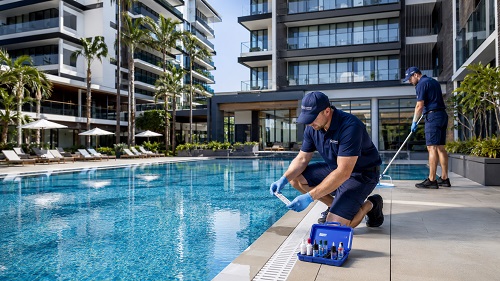
Scheduled pool maintenance for managed properties and facilities where water quality, cleaning, equipment condition and service records need to be checked consistently.
Litra PoolCare works with body corporate and Owners Corporation sites, hotels and accommodation, gyms, schools, wellness facilities and selected builder-managed pool startups. Visits are planned around site use and access, with water testing records, completed-work notes, visible equipment observations and a clear process when further action is required.
Planned visits with water testing records, pool-care notes, equipment observations and follow-up reporting where required.
✓Planned visit frequency: attendance is set around pool use, season, site access and operating conditions.
✓Water testing records: relevant readings are recorded with each visit and corrective work is noted where required.
✓Equipment reporting: visible leaks, abnormal pressure, poor flow, pump behaviour and controller or chlorinator concerns can be recorded.
✓Issue reporting: managers are told when a problem needs immediate attention, approval, equipment assessment or a return visit.
Planned commercial pool maintenance
What a scheduled commercial pool visit covers
Commercial pool maintenance is scheduled pool care for shared or high-use facilities where water testing, cleaning, equipment observations and service records need to be managed as a repeatable routine. The exact work depends on the pool, treatment system, bather load, site access and agreed service frequency.
Scheduled attendance
Visits are planned around the way the site operates rather than pool size alone. Bather load, operating hours, weather exposure, plant performance and seasonal demand all affect how often the pool may need attention.
Water testing and routine pool care
Relevant water readings are checked and recorded alongside cleaning, debris removal, brushing, basket checks, vacuuming where required and chemical adjustment within the agreed service scope.
Plant and equipment observations
Visible checks can identify leaking unions or valves, air in the pump basket, loss of pump prime, unusual pump noise, weak return flow, filter pressure changes, chlorinator status or obvious controller and treatment-system problems.
Reporting when further work is needed
If an issue cannot be resolved during the scheduled visit, the site contact is told what was found and whether the next step is water re-testing, equipment diagnosis, approval for additional work or a return visit.
After each scheduled attendance, the manager should be able to see the pool condition at the time of the visit, what work was completed and whether anything still requires attention.
Four service scenarios
Commercial pool service by site type
Different facilities place different demands on the pool. Visit timing, access arrangements and reporting are adjusted to the way each site is actually used.
Body corporate and Owners Corporations
Shared residential pools need reliable attendance and records that managers or committees can review. Equipment work or non-routine treatment can then be referred for approval rather than being mixed into the normal visit.
Guest-facing pools can change quickly as occupancy rises. Weekend use, events, sunscreen, organic contamination and weather can increase sanitiser demand and make service timing more important during busy periods.
Gyms, schools and wellness facilities
Facilities with lessons, classes or programmed use often have predictable high-load periods. Service timing can be planned around those periods, while access arrangements and nominated contacts are confirmed before recurring visits begin.
Builders handover and startup
New or recently completed pools may require a separate startup and handover process before normal maintenance begins.
The visit record shows the condition found on site, the work carried out and anything that still needs action. Reporting detail can be agreed with the property or facility manager before recurring service starts.
Typical visit record
Date of visitThe attendance date is recorded so the service can be matched with weather, occupancy, reported problems or equipment events.
Water testsRelevant readings are recorded for the pool and treatment system in use, together with corrective treatment completed during the visit where applicable.
Work completedCleaning, brushing, vacuuming where required, basket checks, chemical adjustment and other agreed maintenance tasks are listed.
Equipment observationsNotes can record abnormal filter pressure, weak flow, pump priming problems, unusual pump noise, chlorinator status, leaks or visible faults around valves, unions and treatment equipment.
Photos when requiredPhotos can be included when they help document an equipment fault, access problem, unusual water condition or work requiring approval.
What the manager can see from the report
The report separates routine work from unresolved items. This makes it clear whether the pool was operating normally, whether water needed correction, whether equipment needs further diagnosis or whether additional work requires approval.
Why repeated readings matter
A single test shows the pool at one point in time. Repeated records can reveal rising filter pressure, repeated chlorine demand, unstable pH, changing flow or equipment problems that appear intermittently rather than during every visit.
How issues are escalated
What happens when a scheduled visit finds a problem
Issues found during a visit are recorded according to what needs to happen next: immediate site notification, water correction, equipment assessment, approval for additional work or a scheduled return visit.
Safety issue
A condition that may affect safe pool or plant-room use is reported promptly to the nominated site contact, together with the observed issue and whether access or equipment operation may need to be restricted pending assessment.
Water-quality issue
An abnormal reading or loss of clarity is tested, corrective treatment is completed where it falls within the service scope, circulation and filtration are checked, and re-testing is arranged when the pool cannot be confirmed stable during the same visit.
Equipment fault
If a pump, filter, chlorinator, heater, controller, valve or visible pipe connection shows a fault outside routine servicing, the problem is documented and can be referred for a separate pool equipment inspection and repair assessment.
Approval required
Work outside the agreed recurring service is reported before it proceeds. The manager, committee or authorised contact can then review the proposed work and provide approval where required.
Follow-up visit: if the pool needs re-testing, further treatment, equipment diagnosis after approval or confirmation that an operating problem has been resolved, the return visit is identified as a separate action.
Service frequency and setup
How commercial pool service frequency is determined
Service frequency is based on the workload placed on the water and equipment. A lightly used apartment pool may behave very differently from a hotel, school or wellness pool even when the pools are similar in size.
Site use and access
Operating hours, pool access, plant-room access, nominated contacts and restrictions on service timing are confirmed before recurring visits begin.
Bather load and peak periods
Higher use can increase sanitiser demand and contamination from sunscreen, sweat and other organics. Hotels, schools, gyms and wellness facilities may also have predictable periods when demand is much higher.
Weather and pool exposure
Outdoor pools exposed to wind, leaves, heavy rain or strong sun may need more debris removal, chemistry adjustment or follow-up testing than sheltered pools with similar usage.
Water and equipment stability
Recurring pH movement, high chlorine demand, filter restriction, unreliable circulation or other unresolved plant issues may justify temporarily closer monitoring until normal operation is restored.
For standard recurring residential-style servicing, see regular pool maintenance plans. Managed commercial sites are assessed separately when pool use, access, reporting or equipment conditions require a different routine.
Request a site and service frequency assessment
Send the site suburb, property type, pool use, access arrangements, current service routine and reporting requirements. Litra PoolCare can review the site and recommend a practical visit frequency and maintenance scope.
There is no single frequency that suits every site. Bather load, operating hours, season, weather exposure, sanitation performance, filtration condition and access all affect how often the pool needs attention. Higher-use or unstable pools may require closer monitoring than lightly used shared pools.
Are pool chemicals included in commercial service?
Chemical supply and treatment are confirmed as part of the agreed commercial service scope. The arrangement can distinguish between products used during routine visits and additional chemical treatment that needs separate approval.
How is site access handled?
Access is agreed before recurring servicing begins. This may include service windows, keys or access codes, reception procedures, plant-room access and a nominated site contact for questions or urgent findings.
What records are provided after a visit?
Records can include the visit date, relevant water readings, work completed, chemical adjustments, equipment observations and photographs where they help document a fault, unusual condition or approval item.
What happens if an urgent fault is found?
The nominated site contact is informed of the problem and what was observed. If normal servicing cannot resolve it, the report identifies whether pool use or equipment operation may need review and whether a separate repair assessment, approval or return visit is required.
Service area: Carrum Downs, nearby South-East Melbourne suburbs and selected Mornington Peninsula areas by availability. Final commercial service scope depends on property type, access, pool use, equipment condition, visit frequency and reporting requirements.
Service Area Map: South-East Melbourne, Nearby Bayside Suburbs & Selected Peninsula Areas
Tap a suburb chip to focus the map. We mainly service Carrum Downs, Frankston, Seaford, Chelsea, Patterson Lakes and nearby south-east suburbs, with selected Mornington Peninsula coverage.
Map shows the main service radius around Carrum Downs. Final visit availability still depends on suburb, access, and current workload.
Map could not load. Service areas include Carrum Downs, Frankston, Seaford, Chelsea, Patterson Lakes, Langwarrin, Skye, Edithvale, Aspendale, Mordialloc and nearby south-east suburbs.
CleaningMaintenanceSkimmerFiltrationChlorineAlgaePumpBackwashVacuumpH LevelSanitizerBrushDebrisWater Test
CleaningMaintenanceSkimmerFiltrationChlorineAlgaePumpBackwashVacuumpH LevelSanitizerBrushDebrisWater Test


 Cleaning