

New pool covers, new rollers, sizing and installation
Replace the cover, roller or complete pool cover system
Litra PoolCare supplies and installs new pool covers and roller systems across Melbourne's south-east, nearby Bayside suburbs and selected Mornington Peninsula areas. Depending on the condition of the current equipment, we can replace the cover only, the roller only, or install a complete new cover-and-roller setup.
We do not assume the old dimensions or roller position are still the best choice. The new setup is measured against the pool and the available space, including steps, curves, paving, access, cover weight and the position from which the blanket will be wound.
This page is for new and replacement equipment: cover-only replacement, roller-only replacement, complete cover and roller change-outs, sizing and installation. If the current system is still usable and needs adjustment, tracking correction, straps or clips, use pool cover and roller service.
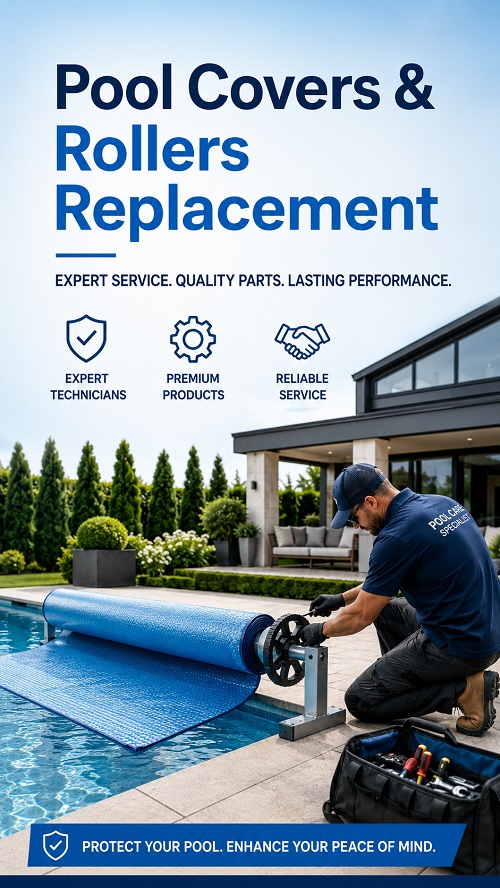
Cover-only, roller-only or complete replacement?
If one component is still in good condition, it may be retained rather than replaced unnecessarily. The condition of the blanket and winding hardware is considered separately before the new equipment is selected.
Cover-only replacement
This can work when the existing roller is straight, stable, sufficiently wide for the replacement cover and the tube does not flex excessively under normal winding load. The blanket may still need replacement because it is brittle, torn, delaminating or no longer practical to use.
Roller-only replacement
The current cover can sometimes be retained when its material is still flexible and correctly sized, but the roller is bent, unstable, too narrow, difficult to turn or no longer suitable for the weight of the blanket.
Complete cover and roller change-out
Replacing both parts is appropriate when the blanket and winding hardware are both worn, the existing roller cannot carry the new cover properly, or the old arrangement is too awkward for regular use.
New cover and roller installation
For a pool without a practical cover setup, the blanket, roller size and parking position are planned together. This helps avoid excessive dragging, poor strap angles and a roller location that obstructs normal pool access.
Choosing a new pool cover
Cover selection starts with what the blanket needs to do and how it will be handled after every swim. The material also needs to suit the available roller, because a cover that is consistently difficult to deploy is less likely to be used.
Solar blanket
A solar blanket may need changing when the material has become brittle, bubbles have collapsed, edges are tearing or the sheet no longer sits and winds consistently.
- measure the new material to the pool;
- account for steps, corners and unusual water shapes;
- check roller width and tube suitability against the blanket size and weight;
- position straps to support a controlled wind-up path.
Thermal cover
A thermal cover may be considered where heat retention is a major priority, particularly for a pool that is heated regularly. The additional weight and handling requirements still need to suit the roller and available space.
- consider heating use and overnight heat retention;
- confirm a practical storage position;
- match roller capacity to the size and weight of the blanket;
- keep the setup practical enough for regular use.
Safety-cover systems: replacement must follow the requirements of the specific system, including the cover material, anchors, tensioning method and manufacturer instructions. A general solar or thermal blanket is not a substitute for the swimming-pool safety barrier required for the property.
Choosing a new manual or motorised roller
Manual pool roller
A new manual roller may be needed when the old frame is bent, the tube flexes under load, the wheels or stands are unstable, or the existing unit is too narrow for the blanket.
- match roller length to the blanket width;
- use a tube suitable for the expected winding load;
- provide a stable working and parking position;
- keep the winding handle practical for regular use;
- consider wheel movement and paving condition where the roller is mobile.
Motorised pool roller
A powered roller may suit a larger or heavier blanket, frequent pool use or a property where manual winding makes the cover impractical to use consistently.
- confirm the available roller position and movement path;
- check the blanket dimensions and expected load;
- identify controller and electrical requirements before equipment is ordered;
- retain suitable access for future servicing;
- arrange the required electrical connection through a Registered Electrical Contractor where hard-wired work is needed.
Electrical work: new circuits, hard-wired connections, switchboard alterations and electrical fault work are outside the pool-service scope and must be completed by an appropriately licensed electrical contractor.
How a new cover and roller are sized
Pool length and width establish the starting dimensions, but they do not tell the whole story. The shape of the water, blanket weight, roller position and surrounding space determine whether the finished setup will be straightforward to use.
The main water dimensions establish the starting cover size and the practical roller width.
Non-rectangular sections affect the blanket shape and how the material moves towards the roller.
The winding unit needs enough room to sit securely without blocking access or pulling the blanket from an excessive angle.
A mobile roller needs a usable surface. Sloping or uneven paving can affect frame stability and the direction of pull.
The blanket size and material affect both manual handling and the amount of flex the roller tube must resist during winding.
Fences, garden beds, walls, gates and narrow paths can determine where the new roller can realistically be positioned.
How a new cover or roller is measured and installed
The work varies between a cover-only job, roller-only job and complete installation. After fitting, the blanket should sit correctly on the water, wind onto the roller without persistent sideways tracking and remain practical for regular use.
- Confirm what needs changing Check whether the blanket, roller or both need to be replaced and identify any components that remain suitable for reuse.
- Measure the pool and working area Confirm water dimensions, steps, curves, roller clearance, paving conditions and the intended storage position.
- Match the equipment Select a cover type, cover size and roller capacity that suit the pool, heating use, expected load and normal handling.
- Remove the old components Remove the agreed blanket, roller or both so worn or unsuitable hardware is not carried into the new installation.
- Fit the new setup Position the roller, fit the blanket and set strap positions and roller alignment for a straight, controlled wind-up path.
- Test deployment and winding Run the blanket through normal use, check clearances and tracking, and confirm how the system should be operated and parked.
When the cover and roller should be changed together
The old roller cannot carry the new blanket properly
A tube that is too narrow, too flexible or unstable under winding load can leave a new cover difficult to handle and place unnecessary stress on the attachment points.
The current roller position causes poor handling
If the unit sits at an awkward angle, blocks access or forces the blanket across a damaging path, installing both components provides an opportunity to correct the layout.
The blanket and hardware are both worn
If the cover has reached the end of its usable life and the frame, tube, crank or wheels are also deteriorated, retaining the old hardware can create another repair or replacement job soon afterwards.
The current setup is rarely used
When owners avoid using the cover because it is too heavy or difficult to wind, the new system should address the handling problem rather than reproduce the same arrangement with new material.
What to send for a quote
Wide photos and approximate dimensions help establish whether the job is likely to need a new cover, new roller or both before equipment is selected.
Show the complete water shape, including steps, curves, benches and unusual corners.
Show the cover on the pool and, where practical, wound onto the current roller.
Include the full tube, frame, wheels, handle and the position where the roller normally sits.
Show nearby fences, garden beds, walls, gates and access paths around the proposed roller position.
Include pool length, maximum width and current roller width if they can be measured safely.
Tell us your suburb, whether the pool is heated and whether any part of the current system is intended to remain.
Current cover and roller still usable?
Use the separate service page when the installed cover or roller needs inspection, adjustment, strap or clip service, or tracking diagnosis rather than new equipment.
Pool cover and roller replacement FAQ
Can I replace only the pool cover and keep my existing roller?
Yes, if the roller is straight, stable, sufficiently wide and structurally suitable for the size and weight of the new cover. The tube should not flex excessively under normal winding load, and the frame should remain stable while the blanket is being retrieved.
Can I replace only the roller and keep the current cover?
Yes, where the blanket remains flexible, correctly sized and in usable condition. A new roller may solve problems caused by a bent tube, unstable frame, poor wheel base or an old unit that is no longer suitable for the blanket load.
When should the cover and roller be replaced together?
Both should be considered when the blanket and roller are heavily worn, the existing winding unit is not suitable for the new material, or the old arrangement is too difficult to use regularly.
How is a new pool cover sized?
Sizing starts with the pool length and width, then accounts for steps, curves and other unusual sections. Roller position and winding direction are also considered so the blanket can be retrieved without persistent bunching or dragging.
Do I need a different roller when changing cover type?
Not always. The current roller can remain if its width, tube strength, frame and winding capacity are suitable for the dimensions and weight of the new blanket. A larger or heavier cover may require a different roller.
Can you install a motorised pool roller?
A motorised roller can be considered where the pool layout, blanket size and available space suit powered operation. Roller position, expected load, controller requirements and electrical supply need to be confirmed first. Hard-wired electrical work must be completed by an appropriately licensed electrical contractor.
Planning a new pool cover or roller?
Send photos of the pool, current blanket, roller and surrounding space together with approximate dimensions and your suburb. Litra PoolCare can determine whether the site suits cover-only replacement, roller-only replacement or a complete new cover-and-roller installation.