

What a strong chlorine smell usually means
If your pool smells like chlorine and swimmers complain about stinging eyes, the answer is usually not “turn the chlorinator down.” In many Melbourne residential pools, the smell comes from reacted chlorine by-products, pH drift, heavy swimmer load, poor circulation, dirty filtration or a salt chlorinator that is not keeping up with the current demand.
What to do first if your pool smells like chlorine
Use this sequence before making large chemical changes. It helps separate a real chlorine-demand problem from a pH, filtration or circulation problem.
Does a strong chlorine smell mean there is too much chlorine?
Not usually. Clean, well-balanced pool water should not have an aggressive chemical smell. The smell many pool owners describe as “too much chlorine” is often caused by chloramines, which form when chlorine reacts with sweat, urine, body oils, sunscreen, leaves, dust and other organic contamination.
This is why a backyard pool can smell worse after a hot weekend even when the water still looks clear. The pool may have had extra swimmers, more sunscreen, more sunlight, a cover sitting on overnight and only a short pump cycle. The water looks acceptable, but the chemistry is already working harder than normal.
Practical meaning: free chlorine is the active sanitiser still available. Combined chlorine is chlorine that has already reacted with contaminants. When combined chlorine builds up, odour and irritation become easier to notice.
Reducing chlorine output because the pool “smells strong” can make the problem worse if the real issue is high demand and low effective sanitation. Adding acid without checking pH and alkalinity can also push the water further away from balance.
Why eyes sting after swimming
Eye sting usually comes from water balance and sanitation problems working together. The common causes are chloramines, pH drift, high swimmer load, weak filtration, poor circulation or water that has not been checked after weather changes.
In Melbourne residential pools, this often shows up after warm weekends, storms, windy days, long cover use or a salt system that has not been adjusted for summer demand. The pool may not look green, but the water can still feel harsh.
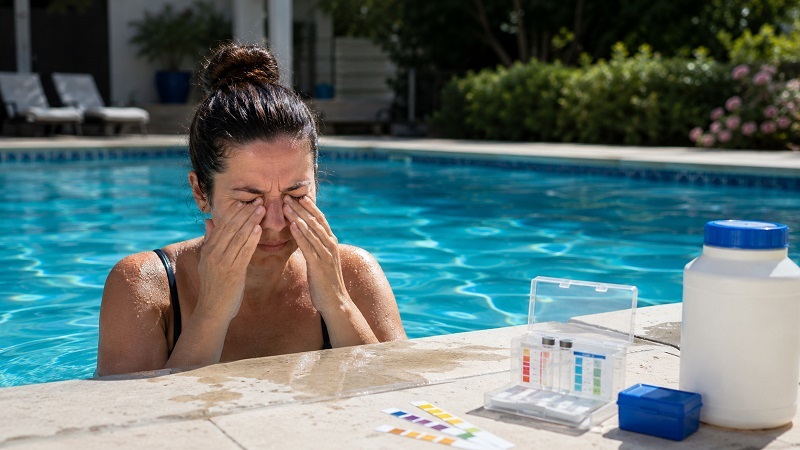
Service clue: if the smell appears when the cover is opened, check combined chlorine, pump runtime, cover cleanliness and filtration before blaming the salt chlorinator. If the same smell returns after a normal pump cycle and filter cleaning, check the readings and equipment pad together rather than adding another random dose.
Quick check: match the smell with the readings
Smell and eye sting help narrow the problem, but the readings decide the next step. Match the symptoms with water readings and equipment behaviour before changing chlorine output or adding chemicals.
Free chlorine, combined chlorine and total chlorine
A single chlorine reading can be misleading if it does not separate free and combined chlorine. To understand a pool that smells strong, separate chlorine into three readings.
Practical question: do not only ask whether chlorine is present. Check how much active free chlorine is available, how much has become combined chlorine, and whether pH and stabiliser are helping chlorine work properly.
What Litra PoolCare checks when a pool smells strong
On site, recurring chlorine smell is rarely treated as a single-number problem. Water readings are checked together with the equipment pad because poor flow, dirty filtration or short pump runtime can keep feeding the same smell after chemicals are added.
Melbourne service pattern: a common call-out is a pool that looks clear after a warm weekend but smells sharp when the cover comes off. In that case, the answer is usually not one more random chemical dose. The readings, filter condition and circulation schedule need to be checked together.
What to check before adding chemicals
The right target depends on the pool surface, stabiliser level, chlorination system and recent conditions such as rain, heat or heavy swimming. These readings usually explain chlorine smell and eye irritation first.
Do not dose blind: odour and eye sting may need oxidation, pH correction, longer filtration, filter cleaning, improved circulation or a mix of steps. The right correction depends on the readings.
Do not swim if these warning signs are present
A strong smell alone does not tell the whole story, but some signs mean the pool should be tested and corrected before normal swimming continues.
Common situations that create chlorine smell
Chlorine smell usually appears after a change in demand, circulation or water balance. These situations are common in residential pools and can happen even when the pool looked fine a day earlier.
What not to do when the pool smells strong
Large chemical changes without readings often create a second problem instead of fixing the first one. These are the common mistakes to avoid.
Do not assume the pool has too much free chlorine
The smell is often linked to reacted chlorine by-products instead. Reducing chlorine production without checking readings can leave the pool less protected.
Do not add acid just because the water feels harsh
Check pH and alkalinity first. Harsh-feeling water can come from several causes, and the wrong correction can push balance further away from target.
Do not rely only on total chlorine
Total chlorine does not show how much active free chlorine is available. Separate free chlorine from combined chlorine when diagnosing odour and irritation.
Do not blame the salt chlorinator immediately
The system may be under-producing for the current bather load, sunlight, runtime or stabiliser level. Confirm water readings and flow first.
Do not ignore filtration
Chemicals cannot compensate for a dirty filter, blocked baskets, weak return flow or poor circulation. Physical removal and mixing are part of the fix.
How filtration and circulation affect chlorine smell
Water chemistry and filtration work together. Chlorine handles sanitation and oxidation, while the filter removes physical debris and fine particles. If water is not moving through the system long enough, contaminants remain in the pool and chlorine demand increases.
In leafy Melbourne suburbs, the smell can return after windy days because baskets, skimmer socks and filter media may still be holding organic debris even after the water surface looks clean.
If odour appears together with cloudy water, recurring algae, weak suction, poor return flow or pump noise, the issue is not chemical only. An equipment inspection can confirm whether filtration, circulation or chlorinator performance is contributing to the problem.
Book water testing if the smell keeps returning
Book water testing if your pool smells strongly after normal use, eyes sting repeatedly, combined chlorine remains elevated, pH keeps drifting, free chlorine disappears quickly, or the water becomes cloudy after swimmers use the pool.
It is also worth booking a visit if the smell returns after brushing, circulation, normal chlorinator runtime, pH correction or filter cleaning. At that point, the likely cause may be water balance, filtration, circulation, chlorinator output, stabiliser level or the ongoing maintenance routine.
FAQ
Why does my pool smell like chlorine but the chlorine test is low?
This often happens when chlorine demand is high and not enough free chlorine remains after reacting with contaminants. The smell may come from chloramines while the useful free chlorine reserve is too low.
Can high pH make eyes sting?
Yes. pH that is too high or too low can irritate eyes and skin. It also changes how efficiently chlorine works, so the pool may need balancing before the water feels comfortable again.
Should I shock the pool if it smells like chlorine?
Not automatically. Shocking can help when combined chlorine is high, but the right action depends on free chlorine, combined chlorine, pH, filtration and circulation.
Do salt pools get chloramines too?
Yes. A salt chlorinator produces chlorine, but the pool can still develop combined chlorine if bather load, debris, poor circulation or insufficient output creates more demand than the system can handle.
Why does the smell get worse when I remove the pool cover?
A cover can trap odours above the water surface. If combined chlorine is present, or the pool has had limited aeration and circulation, the smell becomes more noticeable when the cover is opened.
Key takeaway
A pool that smells strongly of chlorine is not automatically over-chlorinated. For a homeowner, the key is simple: is there enough active free chlorine, and is the water balanced enough for it to work?
When FC, pH, stabiliser and filtration are back in range, the smell should reduce and the water should feel less harsh. If the smell keeps returning, water testing and an equipment review are the most reliable way to separate a chemistry issue from a filtration, circulation or chlorinator issue.