

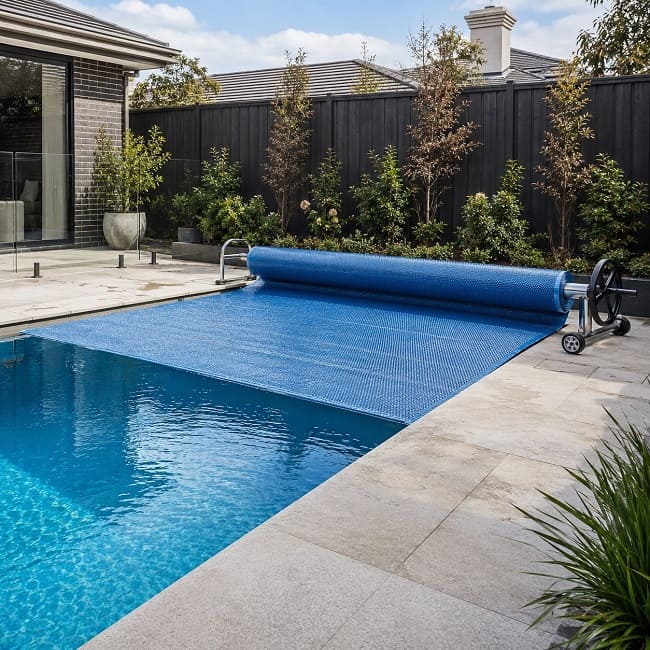
Melbourne pool cover service Manual blanket rollers

Stiff, noisy or uneven pool cover rollers: what Litra checks first

Pool cover winding problems usually come from more than one point: worn hubs, bearing play, poor strap angles, a tube sitting out of square, a damaged leading edge or a cover sheet that has become too heavy to pull evenly. Litra PoolCare inspects the winding assembly, straps, clips, wheels, cover edge and poolside layout before recommending targeted work or a larger upgrade.

Alignment, tube straightness and strap spacing are checked before parts are fitted.
Bearings, hubs, end caps, wheel bases, strap kits and clips can be serviced or replaced where the assembly allows it.
Edge tears, brittle bubbles, delamination and uneven pull marks are assessed before relying on patching or new straps.
Melbourne weather, gum leaves, wind, heat cycles and seasonal pool use are considered when judging the better path.

Need full cover or roller replacement instead?

If the cover is brittle, torn across the sheet, too heavy to handle, or the winding unit is bent, unstable or too worn to justify parts work, use the dedicated cover and roller replacement page.

What can be repaired before a full change-out is needed

Many winding issues can be improved without replacing the complete setup, but the work has to match the fault. A strong cover sheet with poor strap geometry needs different work from an old brittle sheet on a straight and stable unit.

Hardware and movement faults

Stiff rotation, grit in the hubs, bearing play, loose end caps, wobble, unstable wheels and poor tube position are checked as mechanical faults first.

Bearing play Tube alignment Wheel stability

Cover-sheet and strap faults

Torn strap points, snapped clips, edge chafe, uneven pull marks and leading-edge stress are assessed to see whether local work will hold under normal use.

Strap spacing Edge stress Load points

Decision guide: repair, cover-only, roller-only or full replacement

This section replaces the old wide table. It uses compact cards, so the content stays inside the page container on desktop and mobile.

Pool cover and roller service paths

One symptom can have several causes. These cards are a triage guide only; photos and an on-site check may still be needed before confirming parts or a full change-out.

Targeted repair

When it fits
The frame is stable, the tube is straight, and the fault is mainly bearings, hubs, clips, strap spacing, wheel stability or a local edge tear.
Important limitation
Local work will not last if the cover sheet is already brittle, waterlogged or tearing across several areas.

Cover-only replacement

When it fits
The winding assembly is straight and stable, but the solar or thermal cover has reached end-of-life from UV, heat cycles, chemical wear or heavy use.
Important limitation
The old winding setup must be corrected first if poor alignment caused the damage.

Roller-only replacement

When it fits
The cover is still usable, but the tube, frame, wheels or winding hardware is bent, unstable, undersized or too difficult to operate.
Important limitation
The new unit must match the cover size, wet load and poolside position.

Complete cover and roller replacement

When it fits
Both the cover sheet and winding assembly are near end-of-life, unsafe to use normally, too heavy to handle, or no longer worth staged work.
Important limitation
Dimensions, pool shape, roller parking position and access should be confirmed before ordering.

Motorised roller limitation

When it fits
The issue involves a powered unit, controller, remote, motor, power supply, cable route or hard-wired connection.
Important limitation
Electrical supply, controller faults and hard-wired work may require a licensed electrician.
Safety cover note: selected safety cover work must be assessed against the installed system, anchors, tension, manufacturer requirements and local compliance expectations. Do not treat a repaired cover as a safety barrier unless the full system has been checked and confirmed for that purpose.
Motorised roller note: Litra PoolCare can assess visible cover hardware and operating symptoms, but electrical supply, hard-wired faults, controller wiring and circuit changes may require a licensed electrician.

Common symptoms we investigate

Movement and winding problems

  • Hard to turn: often linked to worn bearings, sand inside hubs, corrosion, overtightened fittings or a wet cover load that the unit cannot handle.
  • Wobble during wind-up: may come from a bent tube, loose end cap, unstable wheel base, uneven strap pull or frame movement.
  • Cover rolls into a cone: usually points to poor alignment, uneven strap tension, offset position or distorted material along one edge.
  • Slipping under load: can happen when the cover is too heavy, straps are poorly spaced or the old unit is undersized.

Cover and strap damage

  • Straps keep snapping: UV-brittle webbing, broken clips, sharp snag points and bad pull angles are common causes.
  • Leading edge starts ripping: the front edge may need better load distribution, webbing, handles or a decision to replace the cover sheet.
  • Edge chafe: sometimes repairable if the rest of the material still has strength and the contact point can be corrected.
  • Cracks across the sheet: widespread cracking, brittle bubbles or delamination usually means a new cover is the better investment.

Parts and service work commonly included

Winding hardware

  • Bearings and hubs: for squeal, grinding, stiffness, poor rotation or movement at the end of the tube.
  • End caps and tube fittings: for looseness, tube slip and alignment drift.
  • Wheel bases: for easier parking, less vibration and more stable operation on the pool surround.
  • Frame adjustment: to improve squareness, clearance, strap angle and the winding path.

Connection points and cover edge

  • Strap kits and clips: for slipping, snapping, uneven pull and missing attachment points.
  • Leading-edge webbing: to reduce tearing where the cover is pulled most often.
  • Handles and pull points: for safer handling and better load spread across the front edge.
  • Edge reinforcement: where the material is still strong enough for local work to hold.

What to send for a quote

Clear photos help identify whether the issue looks like a small parts job, a cover-sheet problem, a poor setup angle or a larger upgrade. One close-up is rarely enough because the fault is often caused by layout and load, not only the broken part.

  • Whole roller photo: show the full winding unit, tube, frame, wheels and where it sits beside the pool.
  • Straps and clips: photograph snapped straps, missing clips, uneven spacing and the angle from the tube to the cover edge.
  • Blanket edge: include close-ups of tears, chafe marks, brittle bubbles, delamination or the leading edge pulling apart.
  • Pool shape and cover path: send a wider photo showing steps, curves, corners, coping and where the cover drags or bunches.
  • Access and dimensions: include approximate pool length and width, roller length, access restrictions and whether the area is level.
  • Suburb and site notes: mention your Melbourne suburb, wind exposure, leaf load, rental-property access or any urgent timing needs.
Quote tip: if the unit is motorised, also send a photo of the motor end, controller, power arrangement and any error display. Do not open electrical parts or attempt hard-wired work.

How Litra PoolCare assesses the job on site

  1. Check the poolside layout. We inspect the parking position, surface level, clearance, pool edge, wind exposure and the path the cover takes during winding.
  2. Inspect the winding assembly. We check tube straightness, end fittings, bearing play, wheel stability, frame movement and whether the setup is sized for the cover load.
  3. Map strap and edge wear. We review strap spacing, pull angles, clip condition, leading-edge stress, snag points and the side where the cover starts tracking off line.
  4. Fit or adjust targeted parts. Where the condition allows, we replace worn components, re-seat hardware, adjust strap geometry and remove avoidable drag points.
  5. Test the wind-up path. We run the cover through the corrected path and fine-tune so the same fault is less likely to repeat immediately.

Melbourne conditions that affect pool covers and rollers

Local wear patterns

  • Summer heat and UV: solar covers can become brittle faster when they are left exposed, overheated or chemically stressed.
  • Wind and open backyards: a parked cover can twist, pull on straps or push the frame if it is not secured or positioned well.
  • Gum leaves and debris: leaves, sand and grit increase drag and can grind around hubs, straps and cover edges.
  • Rental and shared-use pools: repeated heavy handling can expose weak handles, uneven pull points and old strap kits quickly.

Why setup matters

A cover that winds smoothly in a clear, level pool area may fail quickly in a tight corner, on uneven paving or beside garden debris. That is why the inspection covers the poolside layout as well as the broken part.

When a new cover or roller is the better option

Targeted work is usually worth considering when

  • The frame is straight and stable.
  • The tube can rotate smoothly after bearing, hub or end-cap work.
  • The cover material still has enough strength to hold straps, clips or edge reinforcement.
  • The problem is mainly alignment, wheels, hardware wear, strap geometry or a localised tear.

A larger change-out is usually the better path when

  • The cover is brittle, cracked, waterlogged or breaking down across the surface.
  • The tube is bent, overloaded or not suitable for the cover size.
  • The frame or wheel base is unstable under normal use.
  • The setup is too heavy or awkward for regular use even after adjustment.
Important: replacing only the cover will not fix the issue if poor alignment, uneven strap spacing or frame instability caused the damage. The winding setup should be corrected before relying on a new sheet.

Related pool services

Some cover and roller jobs overlap with wider pool equipment, plumbing or heating upgrades. These links help separate the right service page without duplicating the same request.

Care tips after service

  • Rinse the cover periodically to reduce chemical residue, grit and sand around straps and edges.
  • Avoid winding in debris because leaves and sand increase drag and can tear the front edge at snag points.
  • Check strap tension at the start of the season, especially if the sheet begins tracking to one side.
  • Park the unit carefully so wheels, frame and cover edge are not stressed by wind or uneven ground.
  • Stop forcing a failing frame if it starts bending, twisting or collapsing, because extra force can damage the cover further.

Frequently asked questions

Why does my pool cover roll to one side?
The most common causes are a winding unit that is not square to the pool edge, uneven strap spacing, uneven strap tension, a distorted cover edge or a tube that moves under load. Correcting the setup and re-testing the wind-up path usually gives a clearer answer than replacing straps alone.
Can pool cover straps and clips be replaced?
Yes, straps and clips can often be replaced when the cover edge is still strong enough to hold them. If the material is brittle, splitting or delaminating, new straps may tear out quickly.
Do I need a new roller if it feels stiff?
Not always. Stiff movement can come from worn bearings, grit inside hubs, corrosion, overtightened fittings or wheel instability. A service and targeted parts work may be enough if the tube and frame are still in good condition.
Can a worn roller damage a new pool cover?
Yes. A unit that sits out of square, wobbles or pulls from uneven strap points can concentrate stress at the leading edge and corners. The setup should be corrected before depending on a new cover sheet.
When is full cover and roller replacement the better option?
Full replacement is usually the better path when the cover is brittle, torn across the sheet or too heavy to use, and the winding unit is bent, unstable, undersized or no longer worth staged work.
Can you repair motorised pool cover rollers?
Visible hardware, cover tracking and mechanical symptoms can be assessed. Electrical supply, controller faults, hard-wired work and circuit changes may require a licensed electrician.

Book a pool cover roller assessment in Melbourne

Tell us what is happening: hard winding, wobble, sideways tracking, snapped straps, torn edge, heavy cover handling or a frame that no longer feels stable. Send photos where possible, and Litra PoolCare will assess whether the next step is targeted work, a cover-only change, a roller-only change or a complete cover and roller replacement.

Service Area Map: South-East Melbourne, Nearby Bayside Suburbs & Selected Peninsula Areas

Tap a suburb chip to focus the map. We mainly service Carrum Downs, Frankston, Seaford, Chelsea, Patterson Lakes and nearby south-east suburbs, with selected Mornington Peninsula coverage.

Map shows the main service radius around Carrum Downs. Final visit availability still depends on suburb, access, and current workload.
Map could not load. Service areas include Carrum Downs, Frankston, Seaford, Chelsea, Patterson Lakes, Langwarrin, Skye, Edithvale, Aspendale, Mordialloc and nearby south-east suburbs.
Cleaning Maintenance Skimmer Filtration Chlorine Algae Pump Backwash Vacuum pH Level Sanitizer Brush Debris Water Test
Call Now Button