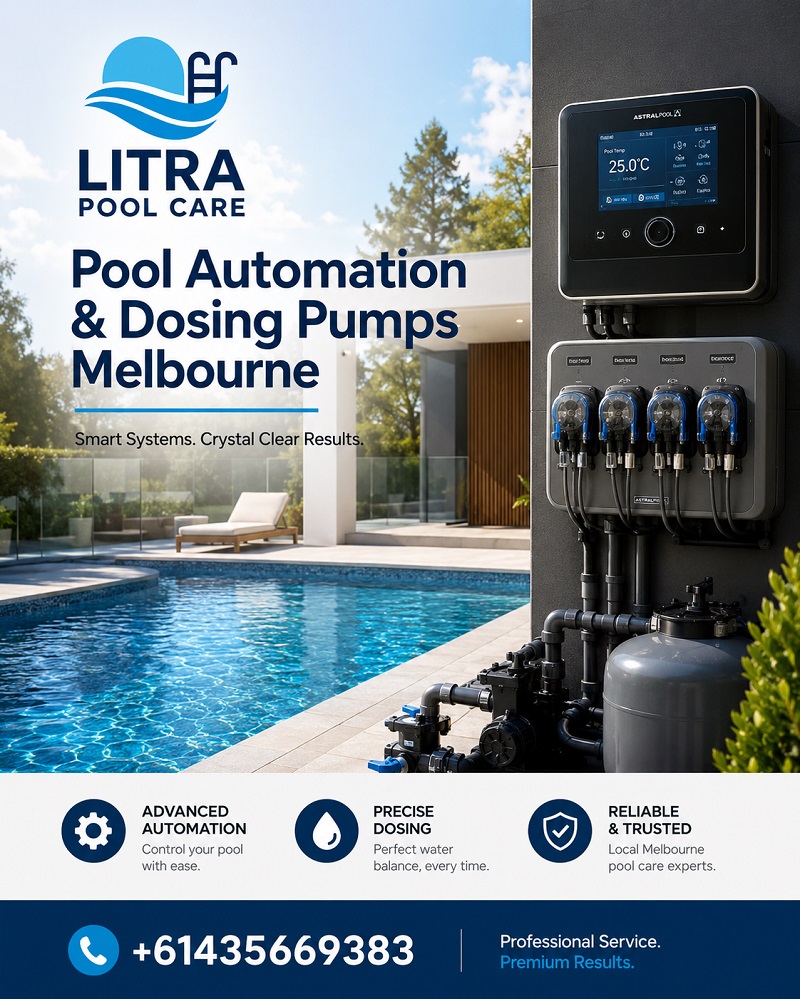
Litra PoolCare services pool automation systems that manage pH, ORP, acid dosing, chlorine dosing, salt chlorinator output and pump schedules. We check the full equipment setup, not only the controller screen.
This service is for pools where water balance keeps drifting, chemical feed is inconsistent, manual correction is needed too often, or automation no longer matches real water test results after equipment changes.
What we check on site
Probe readings, dosing pump output, controller logic, pump runtime, variable-speed settings, flow requirements and chlorinator behaviour are checked together so the system can hold stable water balance in daily use.
pH and ORP controlProbe condition, calibration stability, sample flow and controller response checked together.
Acid and chlorine dosingDosing pump output, tube wear, prime, check valves and injection points inspected.
Pump and timer setupRuntime, flow requirements, variable-speed modes and equipment schedules aligned.
Chlorinator logicSalt chlorinator output reviewed against pool demand, circulation time and seasonal use.
Connected control setup
Automation, dosing and pump control work together
Pool automation only stays reliable when water movement, sensor readings, dosing output and controller timing are aligned. A pH or ORP controller can make poor decisions if the pump schedule is too short, the flow cell sees weak sample water, the chlorinator runs outside the main circulation window or the dosing pump no longer feeds the volume the controller expects.
During an automation service, we check the control chain as one system: pump runtime, variable-speed modes, chlorinator logic, acid dosing, chlorine dosing, probe calibration and flow requirements. This helps prevent a common equipment-pad problem: each device appears to work by itself, but the pool still needs constant manual correction.
Pump schedulesRuntime windows checked against filtration, sampling, heating, chlorination and chemical mixing needs.
Chlorinator output logicOutput settings reviewed against pool demand, pump runtime, salt system behaviour and seasonal use.
Acid dosingAcid feed checked for prime, tube wear, injection point condition, dosing rate and pH response.
Chlorine dosingFeed reliability checked where the system uses liquid chlorine dosing or a separate chemical feed channel.
pH / ORP calibrationProbe response, calibration stability, sensor fouling and controller readings compared with current water behaviour.
Flow requirementsFlow-cell, chlorinator, dosing lockout and equipment minimum-flow conditions checked under real pump settings.
Timer and controller setupFeed delays, lockouts, setpoints and schedule timing checked so equipment does not fight itself.
Variable-speed pump alignmentLow-speed, heating, cleaning and chlorination modes matched to the equipment that depends on flow.
Automation problems need a system check, not only calibration
If the controller display looks correct but the pool still drifts out of range, the issue is usually deeper than one menu setting. A probe can accept calibration and still drift a few days later. A dosing pump can sound normal while worn tubing, prime loss, air leaks or a partly blocked injection point reduce the real feed volume. An ORP value can look steady while the sample stream is weak or the sensor face is fouled.
We check automation as a measuring-and-dosing loop. The sensor side, chemical feed side, pump schedule and controller response all need to line up before the settings can be trusted. Where the site allows, controller readings are compared with current water testing so the system is not judged by the display alone.
Probe condition, sensor age, fouling, storage history and cable condition
Flow-cell cleanliness, sample stream quality and representative water movement
Dosing pump prime, tube wear, check valves, injection point and output behaviour
Controller setpoints, feed delays, lockouts, deadbands and anti-hunt settings
Controller logic after equipment replacement, startup, plumbing changes or pump setting changes
System response against current water testing, not only against its own screen value
Common handover problem: the controller may be powered up with generic settings even though probe position, sample flow, dosing rate, circulation pattern and pump runtime on that pool need site-specific tuning.
Fault patterns
Common reasons automated pH and ORP control stop matching the water
pH keeps climbing while acid is dosing
This can happen after startup periods, with ongoing aeration, or when the acid feed is running but the injection point, mixing pattern or real pump output is not delivering the correction the controller expects.
ORP looks acceptable but the pool still behaves poorly
ORP is a control signal, not a complete water diagnosis. pH, stabiliser level, contamination load, probe cleanliness, water movement and sensor response time all affect how much trust that number deserves.
Chemical use is too high for the pool
Excess feed can come from repeated short cycles, unstable probe readings, aggressive setpoints, false low values, poor sample flow or a controller reacting to noise instead of real demand.
Manual correction is still needed every week
That usually means the system was installed but not fully commissioned. Good automation should reduce weekly adjustment, not add another layer of uncertainty over unstable water balance.
What we often see: the owner trusts the display because the controller looks reliable, but a proper water check and hardware inspection show that controller values, pH behaviour, ORP trend and actual dosing output no longer match.
Service process
How we tune automation so settings stay reliable after the visit
Automation faults often come from several small issues at the same time. A slightly dirty probe, weak sample flow and an aggressive dosing window can each look minor by itself. Together they create unstable control. We separate those layers and tune the system around the installed equipment, not a generic default.
1
Baseline comparison against actual water
We check whether the automation is reading from a reliable starting point. If the controller view is already detached from current water conditions, the remaining settings cannot be trusted until that gap is understood.
2
Probe inspection and calibration quality
We do not treat “it calibrates” as proof that a probe is healthy. We look at stability, response speed, fouling, age and whether the probe is suitable to keep as a control input.
3
Dosing hardware verification
We check whether the dosing pump is moving the volume the controller assumes, whether prime is reliable, whether tubing and injection hardware are sound, and whether chemical feed reaches the water correctly.
4
Control logic and response tuning
We review targets, feed windows, delay settings, lockouts and anti-hunt behaviour so the system does not bounce, chase noise or overcorrect after every small fluctuation.
5
Settings the owner can understand
We leave the automation with settings that match the pool, the season and the equipment condition. The final setup should be easier to test, explain and review when usage, weather or equipment demand changes.
What should be clear after the visit: why each main setting exists, which readings should be watched, what the pump schedule is doing, and when the system needs another check instead of more chemical.
When to book
Why owners book this service instead of adding more chemical
Adding more acid or chlorine to an unstable automation system can hide the fault for a short time and make the operating pattern harder to read. If the sensor is drifting, if sample water is misleading or if the pump is not feeding what the controller assumes, the pool can move in and out of range without a clear cause.
This service suits residential pools with automation already installed, new builds after handover, family pools with changing load, and pools where pH rise or sanitiser instability keeps returning after previous adjustments. It is also useful after replacing a controller, dosing pump, chlorinator, plumbing section or probe set because a correct repair can still change how the control system behaves.
Reduce repeated manual correction instead of chasing the same symptoms each week
Find probe and dosing faults before they become overfeed or underfeed problems
Set realistic expectations for what ORP can and cannot show on that pool
Leave the automation easier to service, explain, monitor and adjust
Melbourne context matters: startup conditions after new construction, shifting temperatures, storm debris, variable usage and inconsistent handover settings can all affect automation stability. A system that looked acceptable on day one often needs a more careful review once the pool is in normal use.
Equipment limits
When automation service turns into equipment replacement
Some automation problems can be solved with cleaning, calibration, pump schedule changes, controller setup or dosing hardware adjustment. Other problems are signs that parts of the system are near end of life. We look for that difference before recommending replacement.
Dosing pump replacementNeeded when the pump head, motor, tubing path or feed reliability no longer supports accurate dosing.
Probe replacementNeeded when pH or ORP probes respond slowly, drift repeatedly or no longer hold useful calibration.
Controller correction or replacementNeeded when settings, relays, display behaviour, feed logic or control outputs no longer work reliably.
Pump schedule correctionNeeded when low-speed modes, timers or circulation windows do not provide enough flow for automation.
Electrical note: electrical supply faults, hard-wired controller faults, switchboard issues or circuit changes may require a licensed electrician. Pool automation service does not replace licensed electrical work where that is required.
Questions before booking
Pool automation, dosing and controller setup FAQs
Yes. Many visits involve existing systems that were installed elsewhere and now need commissioning, probe review, dosing checks, pump schedule correction or recovery after unstable control.
No. ORP can help with control, but it is not the whole picture. Probe condition, pH, stabiliser, contamination load, water movement and sensor response all influence how meaningful the value is.
They do. A controller may assume a feed volume the pump is no longer delivering because of tube wear, prime loss, air leaks, check-valve faults or injection blockage. Menu settings alone do not confirm chemical delivery.
Yes. Low-speed pump settings can reduce flow through a chlorinator, heater, flow cell or sampling line. Variable-speed pump setup should be checked against the equipment that depends on flow, not only against energy use.
Review is sensible when readings become less believable, chemical use changes unexpectedly, a probe ages, hardware is replaced, the pool comes out of startup conditions or the system needs more manual correction than it should.
Book automation service
Need an automation check, calibration and dosing pump check?
If your pool automation is drifting, overdosing, underfeeding or no longer behaving like a reliable control system, Litra PoolCare can inspect the setup, check the hardware and tune the logic so the pool is easier to monitor and adjust.
We service pH and ORP automation, dosing pumps, controller settings, variable-speed pump alignment and post-installation commissioning across Melbourne, with a focus on consistent performance rather than screen readings alone.
Service Area Map: South-East Melbourne, Nearby Bayside Suburbs & Selected Peninsula Areas
Tap a suburb chip to focus the map. We mainly service Carrum Downs, Frankston, Seaford, Chelsea, Patterson Lakes and nearby south-east suburbs, with selected Mornington Peninsula coverage.
Map shows the main service radius around Carrum Downs. Final visit availability still depends on suburb, access, and current workload.
Map could not load. Service areas include Carrum Downs, Frankston, Seaford, Chelsea, Patterson Lakes, Langwarrin, Skye, Edithvale, Aspendale, Mordialloc and nearby south-east suburbs.
CleaningMaintenanceSkimmerFiltrationChlorineAlgaePumpBackwashVacuumpH LevelSanitizerBrushDebrisWater Test
CleaningMaintenanceSkimmerFiltrationChlorineAlgaePumpBackwashVacuumpH LevelSanitizerBrushDebrisWater Test


 Cleaning