

Salt Chlorinator Replacement for Existing Pool Systems
Salt chlorinator replacement for an existing residential pool should be matched to the installed equipment, not chosen from the old box alone. The new salt cell or complete chlorinator needs to suit pool volume, pump runtime, filter condition, pipe layout, salt range, flow direction and the available space around the equipment pad.
Litra Pool Care helps Melbourne pool owners decide whether the practical option is salt cell replacement, control box replacement or a complete salt chlorinator system replacement with a matched new cell and controller.
If the controller still works and the correct replacement cell is available, a salt cell replacement may be enough. If the controller has display, timer, output or control faults but the cell is still serviceable, control box replacement can be assessed. If the system is old, discontinued, undersized, repeatedly faulty or hard to match with current parts, a complete chlorinator replacement is usually the more reliable route.
Request a salt chlorinator replacement quote or send equipment photos so the likely replacement path can be checked before the visit.
Signs your salt chlorinator may need repair or replacement
A chlorinator fault is not always a dead cell. The same pool can show low chlorine because of scale, low salt, weak flow, short runtime, heavy swimmer load, recent rain, dirty filtration or a control box fault.
Low salt warning
A low salt warning may mean the water is actually low in salt, but it can also appear when the cell is scaled, the sensor is dirty or the controller reading is unreliable.
No flow warning
No flow can be caused by low pump speed, blocked baskets, dirty filters, air in the system, closed valves, a faulty flow switch or poor cell position in the pipework.
Check cell light or scaled cell
Scale on the plates reduces output and can trigger check-cell warnings. If plates are worn or damaged, cleaning may not restore reliable chlorine production.
Low chlorine output
Low chlorine can come from a weak cell, incorrect salt level, low stabiliser, short daily runtime, heavy bather load, storm debris or poor water balance.
Display fault, output fault or controller fault
A blank display, unstable buttons, output faults or repeated controller errors may point to the control box. The existing cell, cable plug and output requirement still need to be checked before deciding on controller-only replacement.
What to prepare for a quote
Clear photos help confirm whether the job is likely to be a cell swap, control box replacement, pipework adjustment or complete salt chlorinator replacement.
Photos to send
Equipment details to include
Salt cell, control box or complete chlorinator replacement?
The right option depends on cell condition, controller function, cable connection, output capacity, part availability, pipe layout and whether the current chlorinator can still keep up with the pool.
Salt cell replacement
Suitable when the controller is still reliable and the correct replacement cell matches the existing model, cable connection, unions and pipe position.
Control box replacement
Suitable when the controller has display, timer, output or control faults, but the existing cell is still serviceable and compatible.
Complete chlorinator replacement
Suitable when the system is old, discontinued, undersized, repeatedly faulty, hard to match with current parts, or when both the cell and controller are already worn.
What Litra Pool Care checks before recommending replacement
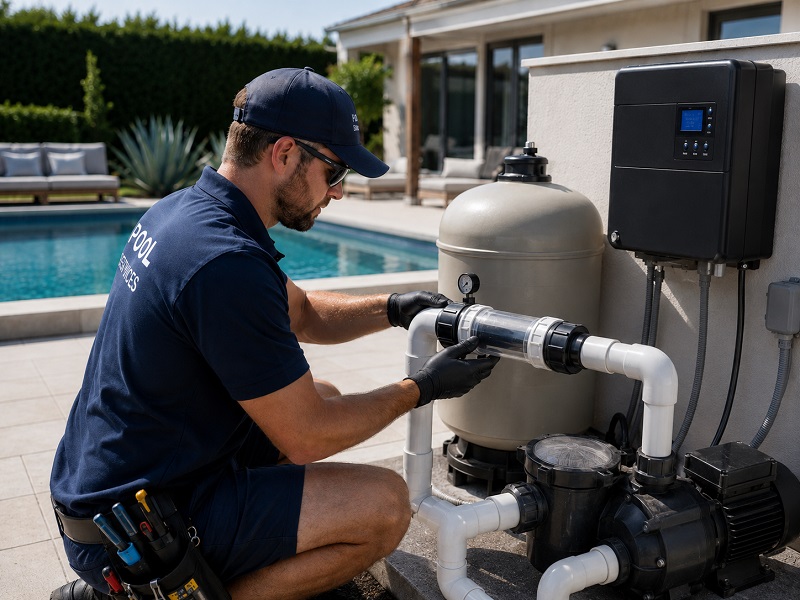
A salt chlorinator recommendation should come after checking the equipment around the unit. For Melbourne residential pools, the technician needs to understand how the chlorinator works with the pump, filter, valves, pipework and daily operating schedule.
Melbourne heat and daily chlorine demand
Hot weather, long daylight periods and heavy swimming increase chlorine demand. If the chlorinator is undersized or the pump runs too few hours, chlorine can fall even when the unit appears to be operating.
Check first pool volume, current output setting, pump schedule and whether the system can maintain chlorine through summer use.
Rain, storms and water dilution
Heavy rain, overflow, backwashing and top-ups can change salt, stabiliser and chlorine levels. After storms, the equipment may be working but the water still needs testing and recovery.
Check first salt level, free chlorine, stabiliser and filter condition before assuming the chlorinator has failed.
Equipment pad conditions
Many existing equipment pads have tight pipework, older valves, mixed brands, limited wall space or previous pump and filter changes. These details affect whether a direct component swap is practical.
Check first pipe diameter, cell position, flow direction, service access and space for the new controller.
Daily runtime and variable-speed pumps
Salt systems only produce chlorine while water is moving through the cell. If a variable-speed pump runs too slowly for the flow switch or for too short a daily window, the chlorinator may not produce enough chlorine.
Check first pump speed, runtime, timer settings and whether the chlorinator receives steady flow during its production window.
Salt chlorinator brands we commonly work with
Brand matters because cell shape, unions, cable plugs, controller output and part availability are not universal. The installed model label and photos of the cell, controller and pipework are the starting point for replacement advice.
Neptune
Neptune systems may require checking the cell model, controller output and union layout before deciding between cell replacement and full chlorinator replacement.
AstralPool
AstralPool replacement depends on the installed series, cell size, cable connection, available parts and whether the controller still supports the required output.
Zodiac
Zodiac chlorinator work starts with confirming the controller model, cell condition, error message and whether a component replacement is still economical.
Waterco
Waterco salt systems are checked for cell compatibility, controller condition, pipe integration and whether the current equipment pad allows a clean replacement.
Salt Chlorinator Replacement FAQ
Can you replace just the salt cell?
Yes. Salt cell replacement may be suitable when the current control box is reliable and the correct replacement cell matches the model, unions, cable connection and output requirement.
Why does my salt chlorinator say low salt when the pool has salt?
A low salt warning can come from actual low salt, a scaled cell, cold water, sensor issues or a controller reading problem. The salt level should be tested before parts are replaced.
What does a no-flow warning mean?
No-flow warnings are often linked to circulation. Common causes include low pump speed, dirty filters, blocked baskets, air leaks, closed valves, a faulty flow switch or poor pipe layout.
When is control box replacement enough?
Control box replacement may be enough when the controller has failed but the salt cell is still in good condition, compatible and reasonable to keep.
When should I replace the complete salt chlorinator system?
Full replacement is often recommended when the system is old, discontinued, undersized, repeatedly faulty, hard to match with current parts, or when both the cell and controller are near end of life.
Can low chlorine mean the chlorinator is broken?
Sometimes, but not always. Low chlorine can also come from low stabiliser, high swimmer load, recent rain, short pump runtime, dirty filtration, low salt or poor water balance.
Do I need water testing before replacing a salt chlorinator?
Water testing is strongly recommended when chlorine is low, the pool is cloudy, the salt reading is uncertain, or the pool has recently had heavy rain, overflow, backwashing or heavy use.
Can Litra Pool Care handle electrical faults?
Litra Pool Care can assess the pool equipment and chlorinator side. Electrical supply faults, switchboard issues, damaged hard-wired connections or electrical installation work may require a licensed electrician.
Book a salt chlorinator replacement assessment
If your pool is showing low salt warnings, no-flow messages, check-cell lights, low chlorine, scaled cell plates or controller faults, send photos of the current equipment and request advice before replacing parts.