

Chemical dosing pump and sensor replacement for Melbourne pools
Pool dosing system replacement is needed when acid dosing, chlorine dosing or the sensor side of the system no longer gives stable control. Litra PoolCare replaces ageing dosing pumps, chemical feed parts, sensors and visible dosing connections so the equipment pad can run with fewer faults and better day-to-day control.
Replacement work is scoped around the full dosing path, not only the pump body. The visit may include checking the dosing cabinet, suction and discharge tubes, injection point, sensor area, controller response, visible pipework and basic operation after installation.
- ✓Acid dosing system replacement
- ✓Chlorine dosing pump replacement
- ✓pH, ORP, flow and temperature sensor replacement within dosing work
- ✓Dosing tubes, feed lines, injection points and visible pipework checks
- ✓System checks and recommissioning after replacement
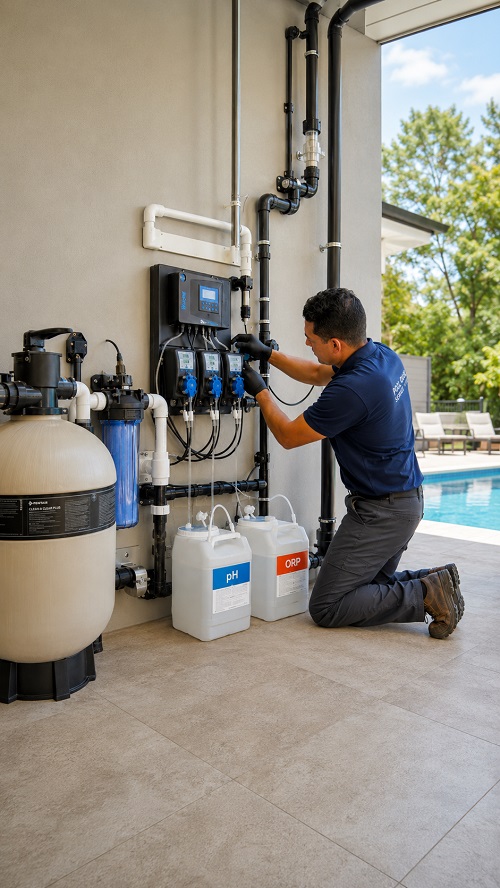
What dosing equipment can be replaced?
Dosing equipment often fails as a group of connected parts. A worn pump tube, weak feed line, blocked injection point or drifting sensor can affect the whole system, even when the controller still powers on. Litra PoolCare can replace the dosing equipment below as part of a focused dosing upgrade or wider equipment-pad replacement.
What dosing replacement covers
Dosing replacement should match the real equipment pad. Depending on the setup, the work may include the acid pump, chlorine pump, chemical controller, sensors, dosing lines, injection fittings and the visible plumbing around the dosing points.
Acid dosing system replacement
Acid dosing system replacement is used when the acid pump, controller channel or dosing line no longer supports stable pH control. The work may include replacing the pump, checking suction and discharge lines, inspecting the injection point and confirming the new setup operates correctly after recommissioning.
Chlorine dosing pump replacement
Chlorine dosing pump replacement may be needed when the pump is not feeding correctly, has become noisy, leaks, loses prime or produces weak output. The replacement should include a check of the dosing tube, feed line, injection point and visible pipework around the dosing area.
Sensor replacement within the dosing scope
Pool pH sensor replacement, ORP sensor replacement, flow sensor replacement and temperature sensor replacement can be included when those readings affect the dosing system. Sensors should be judged against water testing, controller response and system behaviour, not only by the screen value.
Recommissioning after replacement
After replacement, the system should be checked for feed behaviour, flow condition, visible leaks, dosing line position and controller response. This helps prevent new equipment being fitted into a blocked, leaking or poorly routed dosing path.
Sensors we replace as part of dosing work
Pool dosing sensors are part of the chemical control system. If a sensor gives unstable readings, loses accuracy, fails to detect flow or no longer communicates properly with the controller, the dosing system can make the wrong feed decision even when the pump is still running.
A pH sensor supports acid dosing control. Replacement may be needed when readings drift, become slow, move erratically or no longer match manual water testing.
An ORP sensor can be part of chlorine control logic in compatible dosing systems. If the ORP reading is unstable or the sensor has reached the end of service life, it may need replacement during dosing recommissioning.
A flow sensor helps confirm water movement before dosing operation. If the system cannot detect flow reliably, dosing may stop, alarm or operate inconsistently.
A temperature sensor may support controller readings and equipment logic. Replacement is usually considered when the reading is clearly wrong, unstable or no longer available to the controller.
When owners replace dosing equipment
Pool owners usually ask about automatic dosing system replacement when the equipment becomes harder to trust. The water may look acceptable some days, but the equipment pad shows the real problem: old pumps, brittle lines, inconsistent readings, alarms, chemical drift, leaks or untidy pipework around the dosing point.
Ageing setup
Dosing pumps, controllers, sensors, tubes and fittings all age. When several parts are near the end of service life, replacing one small item at a time can lead to repeated callouts and little improvement in reliability.
Unstable chemical feed
If acid or chlorine feed is inconsistent, the pool may need more than a quick adjustment. A weak pump, blocked line, poor injection point or unreliable sensor can all affect how the dosing system behaves.
Cleaner equipment layout
Replacement is also a chance to tidy the chemical equipment area, improve access and remove awkward visible connections where suitable. A cleaner layout is easier to inspect, service and explain to the owner.
Broader equipment replacement
Dosing replacement can be planned with wider equipment work when the pump, filter, salt system, valves or visible pipework also need attention. See pool equipment replacement for the broader equipment scope.
What to send for a dosing quote
Photos help confirm whether the job is a pump swap, sensor replacement, feed-line repair or wider chemical equipment upgrade. They also show spacing, access, model details and the condition of visible pipework.
Send these photos
- Wide photo of the full dosing cabinet or chemical controller area.
- Close photos of acid and chlorine dosing pumps.
- Clear image of labels, model numbers or control panel details.
- Photo of the pH, ORP, flow or temperature sensor area.
- Photo of visible pipework around the dosing point.
Describe the problem
- Unstable pH or chlorine level.
- Pump not feeding, making noise, leaking or showing poor output.
- Sensor error, alarm or unstable reading.
- Old equipment that is difficult to service.
- Request to upgrade dosing equipment during other pool equipment replacement.
Equipment work often planned with dosing replacement
Dosing equipment often sits close to chlorination, valves, automation controls and visible pipework. Where surrounding equipment is also ageing, replacement can be planned as one organised equipment-pad upgrade.
FAQ
Yes. Acid dosing system replacement can be completed separately if the rest of the equipment is still suitable. The pump, feed line, dosing point and surrounding setup should still be checked so the new acid dosing equipment is not fitted into a weak or blocked dosing path.
Yes. Chlorine dosing pump replacement is suitable when the pump is ageing, not feeding correctly, leaking, noisy, losing prime or no longer reliable for the current pool setup. The feed line, dosing tube, injection point and visible pipework should be reviewed as part of the replacement.
Yes. Pool pH sensor replacement, ORP sensor replacement, flow sensor replacement and temperature sensor replacement can be included as part of the dosing system replacement scope. These sensors work with the chemical dosing equipment, circulation and control logic.
Yes. Dosing tubes, suction lines, discharge lines and feed lines can be replaced where they are brittle, blocked, leaking, stained or no longer routed correctly. These parts are important because the pump may run but still fail to deliver the expected chemical volume.
Yes. Dosing replacement can be combined with salt chlorinator replacement, valve work, visible plumbing upgrades or broader pool equipment replacement when the equipment area needs a cleaner and more reliable layout. Photos help confirm whether the work should be staged or handled together.
Send photos of the dosing cabinet, acid and chlorine pumps, labels, controller, sensor area, visible pipework and any error messages or damaged parts. A wide photo of the full equipment pad is also helpful because it shows access, spacing and pipe direction.
Yes. After replacement, the system should be connected, checked and recommissioned so the equipment is ready for controlled operation. This includes checks around dosing lines, flow condition, sensor area, injection point and visible connections.