

Sand and glass media replacement for pool filters that are still worth keeping
Pool filter media replacement is for filters where the tank and valve are still serviceable, but the sand, glass media or internal filtration performance has dropped. It is a practical repair when the pool is circulating, yet the water stays hazy, dusty or slow to clear after backwashing.
Best fit: the filter body is not cracked, warped or leaking, and the main problem is poor filtration, compacted media, channelling, damaged internals or media that no longer performs properly.
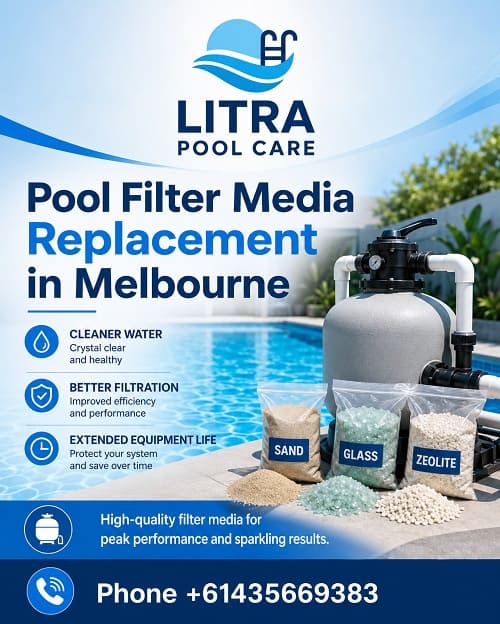
What pool filter media replacement includes
The aim is to restore filtration performance without replacing a filter body that can safely remain in use. The right approach depends on the filter model, pool size, flow rate, media type, water condition and the symptoms seen on site.
Sand replacement
Old sand is removed and replaced with suitable new filter sand. This can help when the pool stays dull or dusty even after normal circulation and backwashing.
Glass media replacement
Contaminated, fouled, incorrectly graded or poorly performing glass media can be changed when the filter body and internals are still in good condition.
Internal inspection
During media removal, the laterals, standpipe, diffuser, o-rings and visible internal condition can be checked before the filter is refilled.
Signs your pool filter media may need attention
The water stays dull or hazy
The pump may be moving water, but fine particles are not being trapped well. The pool can look cloudy, dusty or flat even after a normal filtration cycle.
Backwashing helps only briefly
If clarity improves after backwashing but quickly drops again, the media bed may be compacted, overloaded, dirty or affected by channelling.
Fine debris returns through the jets
Sand, dust or fine particles returning to the pool can point to damaged laterals, a cracked standpipe, incorrect media grade or internal filter damage.
Chemistry is correct, but clarity is poor
When chlorine, pH and water balance are under control but the pool still will not clear, the filter should be inspected before more chemicals are added.
Other causes to rule out first
Cloudy water is not always a media problem. Poor chlorine control, incorrect pH, algae, heavy debris load, low circulation, blocked baskets, air leaks or a weak pump can look similar. The filter should be checked as part of the whole circulation and water balance system.
Channelling: when water bypasses the media bed
Channelling happens when water cuts narrow paths through the media bed instead of passing evenly through the sand or glass. The filter may still be full, but water takes the easiest path and fine debris can pass back to the pool.
This can develop after years of use, poor backwashing, incorrect media level, heavy debris load, media compaction or internal flow problems.
Common clues
- Cloudy water returns soon after backwashing.
- Pressure readings do not match the water quality problem.
- Fine dust keeps settling on the pool floor.
- The pool clears slowly despite normal pump runtime.
- The filter media has not been changed for many years.
High pressure, low flow and poor filtration after backwash
Pressure and flow symptoms help separate a media problem from a pump, valve or pipework problem. A pressure gauge reading should be considered together with return flow, water clarity and the way the filter behaves after backwashing and rinsing.
| Symptom | What it can mean | What to check first |
|---|---|---|
| High pressure and low return flow | Blocked or compacted media, dirty filter, valve restriction, return-side restriction or pipework issue. | Backwash and rinse result, baskets, valves, pressure gauge accuracy and plumbing around the filter. |
| Poor filtration after backwash | Exhausted media, channelling, incorrect media level, damaged internals or poor settling after rinse. | Backwash duration, rinse step, media age, laterals, standpipe, valve position and water chemistry. |
| Normal pressure but cloudy water | Possible channelling, undersized filtration, algae starting, water balance issue or insufficient runtime. | Water test, pump runtime, sanitiser level, filter condition and return flow. |
| Sand or media in the pool | Possible damaged laterals, cracked standpipe, incorrect media grade or internal filter damage. | Inspect the filter internals before simply adding new media. |
Sand replacement vs glass media replacement
Sand media
Sand remains a practical option for many residential pool filters. It is familiar, cost-effective and suitable where the existing filter is designed for sand media.
- Works well in many standard residential media filters.
- Must match the filter manufacturer’s requirements.
- Needs correct quantity, bed depth and backwash routine.
Glass media
Glass media can be a suitable replacement option for many sand-style filters, but grade, quantity and installation method matter.
- Can suit many compatible media filters.
- Requires correct grading and bed depth.
- Should be matched to the filter model and system condition.
When new media will not solve the problem
New sand or glass media can improve mechanical filtration, but it cannot fix every pool problem. A filter should be checked before the job is quoted so the real cause is not missed.
Equipment problems
- Cracked or leaking filter tank.
- Damaged laterals or standpipe.
- Undersized filter for the pool and pump.
- Weak pump, air leak or poor suction.
- Faulty valve or restricted pipework around the equipment pad.
Water problems
- Active algae growth.
- Low or unstable chlorine.
- Incorrect pH or alkalinity.
- Heavy organic load after storms or leaf drop.
- Water balance problems that need testing before equipment work.
How the filter is checked before quoting
Before quoting, the filter should be checked so old media is not blamed for a cracked tank, damaged internals, weak flow or a water balance issue. This helps avoid replacing media inside a filter that is no longer worth repairing.
Check the filter type and tank condition
The filter body, model, pressure rating, visible leaks, sun damage and general condition are reviewed.
Check pressure, flow and symptoms
Pressure, return flow, backwash performance, cloudy water history and equipment pad plumbing are considered together.
Inspect internals where required
Laterals, standpipe, diffuser, o-rings and visible internal condition should be checked before refilling with new media.
Restart, backwash and hand over
After new media is installed, the filter is restarted, backwashed and rinsed as required, then checked for normal pressure and return flow.
When full filter replacement is better
New media is not always the right repair
If the filter tank is cracked, leaking, badly sun-damaged, unsafe, incorrectly sized or has internal damage that is not worth repairing, replacing only the media is unlikely to give a reliable result.
Media replacement may be suitable when
- The tank is sound and not leaking.
- The filter is correctly sized for the pool.
- The multiport valve and pipework are workable.
- The main issue is poor filtration performance.
- Internal parts are serviceable or repairable.
Full filter replacement may be better when
- The tank is cracked, warped or unsafe.
- The filter repeatedly leaks under pressure.
- Replacement parts are not practical to source.
- The filter is undersized for the pool and pump.
- The system needs a broader equipment upgrade.
Media replacement and water testing should work together
New media can improve mechanical filtration, but it cannot correct algae, unstable chlorine, incorrect pH, heavy debris load or poor circulation by itself. If the water chemistry is still out of range, the pool may remain cloudy even after the filter has been serviced.
Mechanical side
Filter media, laterals, valve position, pump flow, backwash routine, baskets and pipework determine how well particles are physically removed.
Water chemistry side
Chlorine, pH, alkalinity, stabiliser and contamination load determine whether the water can stay clear after filtration has improved.
Photos that help before a filter media quote
A few clear photos can often show whether the filter is likely to need new media, deeper servicing or full replacement.
Filter and label
Send a photo of the full filter and any visible brand, model label or size marking.
Pressure and valve
Include the pressure gauge, multiport valve position and pipework around the filter.
Pool symptoms
Show cloudy water, dust returning to the pool, low flow, media in the pool or other visible signs.
FAQ: pool filter media replacement in Melbourne
Is media replacement the same as pool filter replacement?
No. Media replacement keeps the existing filter tank if it is still usable. Pool filter replacement means replacing the filter unit itself, usually because the tank, internal parts, valve or sizing is no longer suitable.
How often should pool filter media be replaced?
There is no single fixed interval for every pool. It depends on the filter type, media type, pool load, backwash routine, water balance and symptoms. If the water stays hazy, pressure behaves abnormally or backwashing only helps briefly, the media and internals should be checked.
Can old sand cause cloudy pool water?
Yes. Old or compacted sand can contribute to poor clarity, especially if the media bed is affected by channelling or no longer traps fine particles well. Cloudy water can also come from chemistry, algae, low circulation or pump problems, so the whole system should be checked before the repair is chosen.
Can I change from sand to glass media?
Often this is possible in suitable media filters, but it depends on the filter model, internal condition, manufacturer requirements and correct media grading. The filter should be assessed first.
Why is filtration poor after backwashing?
Poor filtration after backwashing can be caused by exhausted media, channelling, incorrect rinse procedure, damaged internal parts, wrong media level, water chemistry problems or a flow issue elsewhere in the system.
When should I replace the whole filter instead?
Full replacement is usually better when the tank is cracked, leaking, unsafe, badly aged, undersized or has internal damage that is not worth repairing. In those cases, new media alone is unlikely to provide a reliable result.
Related pool filter and equipment services
Use these pages when the problem is broader than media condition or when the filter needs deeper servicing, water testing or full replacement.
Not sure whether you need new media or a new filter?
Send photos of the filter, pressure gauge, multiport valve, equipment pad and a short description of the symptoms: cloudy water, pressure change, low flow, media in the pool or poor filtration after backwashing. This helps decide whether media replacement, filter service or full filter replacement is the right next step.