
Pool Acid Wash Melbourne
Pool acid washing may reduce persistent staining or mineral deposits on suitable cementitious finishes. Before any pool is drained, Litra PoolCare assesses the finish, its condition and the likely cause of the discolouration.
Final price depends on pool size, surface condition and the work required.
When is a pool acid wash worth considering?
Acid washing is for selected surface problems—not routine cleaning
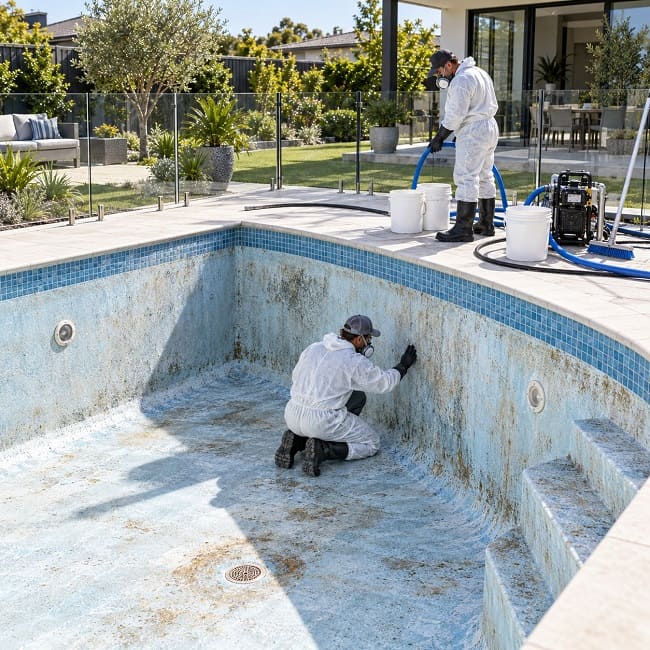
A professional acid wash may be considered where persistent staining or mineral deposits remain on a compatible cementitious pool finish and normal cleaning or a less aggressive treatment is unlikely to produce an acceptable result.
Green water, cloudiness, active algae or unstable chemistry should normally be corrected before assuming the pool surface requires acid washing.
Acid washing is not suitable for every pool finish and is not guaranteed to remove every stain.
Persistent surface staining
Staining that remains after appropriate cleaning and water correction may justify a closer assessment of the pool finish.
Selected mineral deposits
Some scale and mineral-related deposits on suitable cementitious surfaces may respond to controlled acid treatment.
Green or cloudy water
If the main problem is water quality, algae or filtration, water treatment should normally come before surface restoration.
Pool surface assessment comes first
Acid washing works by reacting with the outer layer of a cementitious pool finish. Because the process removes material from that surface, unnecessary or aggressive treatment can accelerate wear. The finish and its existing condition must therefore be identified before treatment is approved.
| Pool finish | Assessment | Why it matters |
|---|---|---|
| Plaster or rendered cement finish | May be considered after checking age, surface wear, staining, previous acid treatments and repairs. | Acid reacts directly with the cementitious surface and can worsen an already thin, etched or deteriorated finish. |
| Cementitious pebble, quartz or aggregate finish | The cement matrix, exposed aggregate and overall condition are assessed before treatment. | Excessive treatment may expose more aggregate or leave an uneven appearance. |
| Fibreglass, vinyl or painted surface | Conventional acid washing is not assumed to be suitable. Surface-specific cleaning or restoration methods should be considered instead. | These finishes respond differently from cement-based interiors and may be damaged by unsuitable chemical treatment. |
| Cracked, delaminating or badly worn surface | Acid washing may be declined where the existing finish is already too compromised. | Acid washing cannot repair cracks, delamination, exposed substrate or structural deterioration. |
Pool acid wash process
The exact scope depends on the pool construction, finish, staining and site conditions. Work is planned as one controlled sequence from assessment through to refill and recommissioning.
Surface assessment
The finish, staining pattern, existing wear and previous treatment history are reviewed before the service is confirmed.
Drain planning
Pool construction, weather, groundwater conditions, access and the safe empty-pool period are considered before draining begins.
Surface preparation
Once safely drained, loose debris and contamination are removed so the exposed finish can be treated consistently.
Controlled acid washing
Suitable areas are treated using a method matched to the confirmed cementitious finish and the condition being addressed.
Rinse and residue removal
The surface is rinsed and process water is contained and handled through an appropriate disposal route rather than discharged to stormwater.
Refill and recommissioning
The pool is refilled, water chemistry is tested and balanced as agreed, and normal pump, filtration and circulation operation is restored.
Why draining and wastewater handling matter
Groundwater and hydrostatic uplift
A swimming pool should not simply be emptied without considering its construction and surrounding ground conditions. When groundwater pressure outside an empty pool is high enough, hydrostatic uplift can move or damage the pool shell.
Recent heavy rain, saturated ground, the pool structure and any hydrostatic protection are therefore considered before a full drain is approved.
Acid-wash wastewater and rinse water
Acid-wash wastewater and rinse water are not discharged to stormwater. The disposal route is determined for the property and the applicable EPA Victoria, council and relevant water-authority requirements.
Site access, drainage layout and the volume of water involved can therefore affect both the work plan and final price.
What an acid wash may improve—and what it cannot repair
Selected stains and mineral deposits
Controlled acid treatment may reduce certain stains or deposits on a compatible cementitious finish. The degree of improvement depends on the cause, depth of discolouration and condition of the surface.
Damaged or deteriorated finishes
Acid washing does not repair cracks, delamination, severe etching, exposed substrate, failing plaster or structural defects. Some stains or colour variations may also remain visible after treatment.
What affects pool acid wash cost?
Pool acid washing starts from $850. Final pricing depends on the pool itself and the work required to complete the treatment safely.
Pool size and depth
Larger pool interiors require more draining, preparation, treatment and rinsing time.
Finish and surface condition
Surface type, existing wear, previous acid treatments and the extent of staining affect the scope.
Access and drainage conditions
Difficult access, hose routes, site levels and wastewater-handling requirements can add work.
Refill and recommissioning
Refill timing, water chemistry and the work required to return circulation and filtration to normal are included in the assessment.
What photos to send for an acid wash assessment
Good photos help determine whether the enquiry is likely to be a surface-restoration job and what needs to be checked on site.
Full pool overview
Send wide photos showing the floor, walls, steps, water clarity and the general extent of the discolouration.
Close-ups of staining
Include several close photos showing the colour, pattern, location and texture of the affected areas.
Pool finish
Tell us whether the pool is plaster, render, pebble, quartz, aggregate, fibreglass, vinyl, painted or another finish if known. Include resurfacing history where available.
Access and surroundings
Send a photo showing access to the pool and any unusual slopes, drainage limitations or restricted equipment access.
Refill, water balancing and circulation restart
After the surface treatment and rinse are complete, the pool is returned to service through a planned refill and recommissioning process.
Refill and water balance
Once sufficient water is restored, relevant chemistry is tested and the initial balance is adjusted according to the refill water, pool finish and agreed service scope.
Circulation and filtration restart
The pump is recommissioned and normal water movement, filter operation and visible connections are checked before the system returns to normal service.
Related pool services and guides
Pool acid wash FAQ
How much does a pool acid wash cost in Melbourne?
Litra PoolCare pool acid washing starts from $850. Final pricing depends on pool size, depth, finish, surface condition, staining, access, draining requirements and the work required to refill and recommission the pool.
Can every swimming pool be acid washed?
No. Acid washing is mainly considered for selected compatible cementitious finishes. Fibreglass, vinyl, painted surfaces and badly deteriorated finishes require a different assessment and may not be suitable for conventional acid washing.
Will an acid wash remove every pool stain?
No. Acid treatment may reduce certain stains and mineral deposits, but the result depends on the cause, depth and condition of the finish. Permanent discolouration, previous repairs or surface deterioration may remain visible.
Does a pool need to be drained for an acid wash?
A conventional full acid wash normally requires the interior surface to be exposed. Before draining, the pool construction, recent weather, groundwater conditions, hydrostatic protection and site conditions must be considered because an empty pool can be vulnerable to hydrostatic uplift.
What happens after the acid wash?
After treatment, rinsing and appropriate wastewater handling, the pool is refilled. Water chemistry is then tested and balanced as agreed, and the pump, filtration and circulation system are recommissioned.
Request a pool acid wash assessment in Melbourne
Send your suburb, full-pool photos, close-ups of the staining and any information you have about the pool finish or previous resurfacing. Litra PoolCare can assess the likely scope and confirm whether acid washing is appropriate before the pool is drained. Service availability is confirmed by suburb, site access and job scope.