

Pool filter installation involves matching the filter to the pump flow, pool use, plumbing and available equipment space.
Before startup, Litra PoolCare confirms the valve arrangement, releases trapped air, inspects the connections for leaks and records the clean-filter pressure at the normal pump speed.
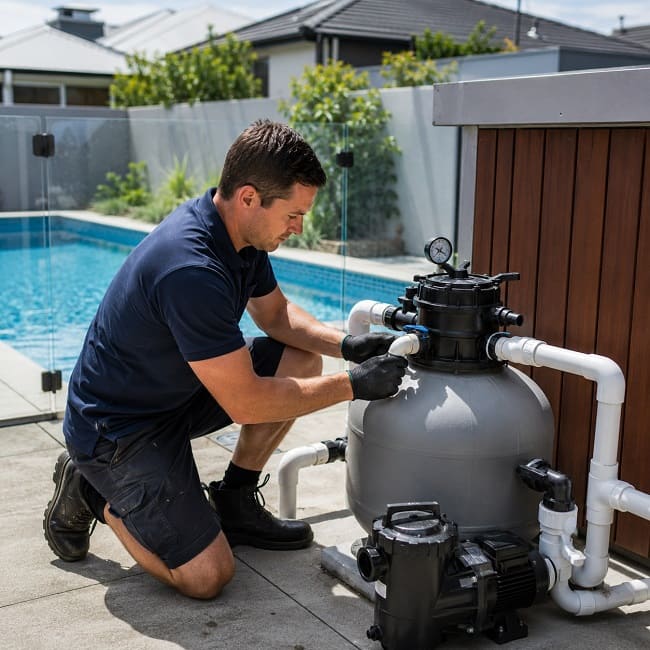
Pool filter installation for cleaner water and stable pressure
A correctly selected filter supports steady circulation, practical cleaning intervals and consistent water clarity. The installation must suit the pump's real operating flow rather than simply matching the old tank or existing pipe diameter.
The service includes filter selection, installation and startup testing. If the existing filter is still serviceable, media replacement, lid leaks and pressure faults can usually be addressed without installing a new filter.
Sand and glass media operate inside a media-filter vessel and require backwashing. Cartridge filters use removable pleated elements and normally do not need a routine backwash line. The choice depends on debris load, equipment-pad space, existing plumbing and how the filter will be cleaned.
For Melbourne residential pools, filter selection also takes account of equipment-pad access, seasonal debris and the condition of the existing backwash connection.
Glass is a filter media, not a separate vessel type. A compatible media filter can use correctly graded sand or glass media in the quantities and layers specified for that model.
What the installation includes
When installation is the right step
Cloudy water or changing pressure does not always mean the filter needs replacement. Water chemistry, blocked baskets, dirty media, incorrect valve position or suction-side air entry can create similar symptoms. The cause should be identified before new equipment is selected.
The vessel is damaged
Cracks, structural deterioration, persistent tank leaks or damaged threaded connections can make continued use unsafe or uneconomical.
Internal parts have failed
Broken laterals, a damaged standpipe, worn valve components or a failing cartridge assembly can reduce filtration or return debris to the pool.
The filter is undersized
Limited filtration area can lead to short cleaning intervals, rapid pressure rise and unnecessary resistance at higher pump speeds.
The equipment layout is changing
A new pump, heater, chlorinator or plumbing layout can change the required flow range, valve arrangement and available service space.
The pressure vessel does not always need replacement when the media has reached the end of its service life. See the sand and glass media change guide for common symptoms and servicing options.
Sand, glass media or cartridge
Media and cartridge filters suit different plumbing layouts and maintenance routines. Media filters need an effective backwash connection, while cartridge systems can suit sites where routine backwashing is impractical. Both require enough filtration area and clear service access.
Switch the pool equipment off at the circuit breaker, prevent automatic restart and release internal pressure through the filter air-relief valve. Do not loosen a clamp, lid or valve while pressure remains inside the vessel.
Sizing, flow and backwash compatibility
Pool volume is only one part of filter sizing. The installation must also account for pump speed, pipe resistance, suction and return layout, heaters, chlorinators, expected debris load and the filter manufacturer's operating limits.
A system can provide acceptable filtration flow but still perform poorly during backwashing. For media filters, the pump and waste line must support the backwash rate specified for the vessel without excessive restriction or back-pressure.
Pressure gauge and valve operation
Filter pressure becomes useful when it is compared with the clean-filter baseline for the same pump speed and valve arrangement. There is no universal pressure reading for every pool.
The starting pressure is recorded after the filter is clean, trapped air has been released and the pump is running at its normal speed.
The gauge should return toward zero after shutdown and respond consistently when the pump speed changes.
Isolation, check and multiport valves need the correct flow direction, full travel and clear service access.
- A gauge that does not move can have a blocked port or failed mechanism.
- A rapid pressure rise often follows a dirty filter, closed return valve or downstream restriction.
- Unusually low pressure can point to reduced pump flow, suction restriction, air entry or internal bypass.
- A multiport valve must only be repositioned while the pump is off.
See low and high filter pressure troubleshooting for a structured comparison of common pressure patterns.
Pre-start and commissioning sequence
Commissioning confirms that the filter, pump, valves and plumbing work as one circulation system before normal operation begins.
Water direction, unions, isolation valves, waste plumbing and service clearances must match the intended layout.
The lid, clamp, tank O-ring, drain plug, pressure gauge and air-relief components are seated before pressure is applied.
Suction and return valves are opened as required. A multiport valve is positioned only while the pump is switched off.
The pump is prepared for startup and the filter air-relief valve remains open while the vessel fills.
After a steady stream reaches the air-relief point, the valve is closed and the connections are inspected for water leaks, air entry and abnormal pressure.
Normal pump speed, clean-filter pressure and relevant valve positions are recorded as the maintenance baseline.
New sand or glass media commonly requires an initial backwash and rinse before normal filtration. Follow the vessel and media instructions, and switch the pump off before moving the multiport valve.
When the filter is not the real fault
Weak return flow, unstable pressure and noisy circulation are often blamed on the pump or filter without confirming where the restriction or air entry begins.
A loaded filter increases resistance and reduces return flow, particularly at lower variable-speed settings.
Air that returns after startup often comes from a low water level, pump-lid seal or another suction-side leak before the pump.
A partly closed isolation valve or incorrectly positioned multiport valve can restrict flow or send water along the wrong path.
Broken laterals, a standpipe fault, an incorrectly seated cartridge or a failed internal seal can return debris to the pool.
Water around the lid can result from a dirty, dry or damaged O-ring, incorrect lid seating, clamp misalignment or a damaged sealing surface.
A blocked basket, restricted suction line or air leak reduces flow before the water reaches the filter.
Depressurise the vessel before investigating a leaking cartridge-filter lid. See cartridge filter lid leaks after cleaning for the differences between O-ring, clamp and trapped-air symptoms.
Related guides
Common installation questions
Can a new filter use the existing pump?
Often yes, provided the pump's operating flow, pipe size, filter limits and downstream equipment are compatible. The advertised maximum pump flow alone is not enough to confirm the match.
Is glass media a separate type of filter?
No. Glass is an alternative filtration media used inside a compatible media-filter vessel. The tank, valve, standpipe and internal components still form the filter assembly.
What pressure should a new filter show?
There is no single correct reading for every pool. The useful reference is the clean-filter pressure recorded at the normal pump speed after trapped air has been released.
Can a cartridge filter replace a sand filter?
It can in many systems, but the service arrangement changes. A cartridge filter needs clearance for element removal and cleaning, while the old media-filter waste line is no longer used for routine backwashing.
Why is enough backwash flow important?
Backwashing must lift and separate the media bed so trapped debris can leave through the waste line. Insufficient flow can leave channels and contamination inside the media even when normal filtration appears acceptable.
Planning a filter installation or replacement?
Litra PoolCare can assess the pump, valves, available space, backwash connection and service access before the equipment layout is finalised.
View equipment installation service