

Pool heating installation for Melbourne conditions
Litra PoolCare plans first-time pool heating installations, new heat pump connections, bypass arrangements and hydraulic preparation for Melbourne pools. Equipment is considered against pool volume, intended swimming season, circulation performance, available space and realistic heating expectations—not simply the largest unit that will fit.
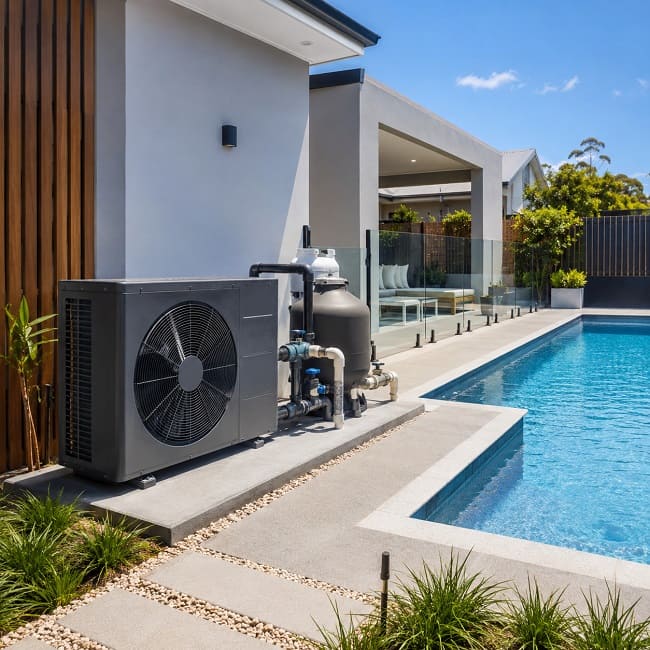
When pool heating installation is needed
Pool heating installation is not limited to replacing a failed unit. It may be required when a previously unheated pool needs a longer swimming season, an old solar setup no longer suits the property, or the existing equipment pad needs to be prepared for a different heating method.
Adding heating to an existing pool
A new heater or heat pump needs a workable return-line connection, suitable flow, enough installation space and a clear plan for controls and daily operation.
Swimming beyond the hottest weeks
Owners who want spring, autumn or more predictable summer use may need a heating system sized around actual use, heat loss and cover habits.
Moving from solar-only heating
A heat pump may provide more controlled heating where roof shade, cloudy periods, old controllers or changing use make solar-only performance inconsistent.
Rebuilding the equipment area
Pool renovations, new paving or equipment relocation can create an opportunity to correct crowded pipework, poor access or an impractical old heater position.
Changing how the pool is used
A pool previously used only in midsummer may need a different heating strategy when a family wants regular swimming, evening use or a defined temperature target.
Replacing failed equipment
If the main issue is an old, leaking or repeatedly failing unit, use the dedicated pool heater and heat pump replacement service.
Heater or heat pump: the right context matters
“Best” depends on how quickly the pool must warm, how often it will be heated, the available energy supply and the site itself. Equipment should be matched to the job rather than chosen from headline output alone.
Best suited to planned, regular heating
An electric pool heat pump generally suits owners who can allow longer heating periods and want to maintain or gradually lift water temperature across multiple days.
- requires suitable airflow around the unit;
- depends on stable pool-water flow;
- needs appropriate electrical planning;
- works more effectively when heat loss is controlled with a pool cover.
Relevant where faster heat-up is the priority
A gas heater may be considered for faster temperature increases, spa use or short-notice heating, subject to site suitability, gas availability and licensed gas work.
- gas installation and connection require the appropriate licensed trade;
- flue, clearances and ventilation follow the selected manufacturer’s requirements;
- water flow and bypass design still affect reliable operation;
- operating expectations should be discussed before equipment is ordered.
Flow, bypass valve and filter pressure checks
A new heating unit becomes part of the filtration loop. If the pump, filter or return plumbing cannot provide suitable flow, the heater may fail to start, stop intermittently or deliver poor temperature gain even when the unit itself is new.
The circulation system is checked before the heating unit is connected
We review visible pipe size and routing, pump behaviour, filter condition, pressure change, valves, check valves where relevant, unions and the practical location of the heating connection. A bypass may be recommended where it is required by the selected system or useful for controlling service flow and future isolation.
a blocked filter, weak pump flow, a closed valve, air entering the suction line or unsuitable existing plumbing.
Pump and filter behaviour
Filter pressure, return strength, pump priming and circulation consistency are checked so the heating unit is not installed into a system that already has a flow problem.
Bypass and valve layout
The valve arrangement should make the water path understandable, allow correct flow through the heater and leave practical access for servicing or isolation.
Connection position
The heater or heat pump is normally planned on the clean return side of the filtration system, with the final order confirmed against the selected equipment manual and the existing sanitising setup.
Pressure and leak check
New unions, valves and visible connections are checked during commissioning for leaks, unusual pressure changes and stable operation through the intended flow path.
Equipment position, ventilation and service access
Heat pump placement is a performance decision, not only a space decision. The unit needs the clearances, airflow direction, drainage and service access specified for the exact model. A cramped location beside a wall, fence or dense equipment stack can make a correctly sized unit perform poorly.
| Site factor | What is checked | Why it matters |
|---|---|---|
| Air movement | Manufacturer clearances, discharge direction, nearby fences, walls, eaves and vegetation. | Restricted intake or recirculated cold exhaust air can reduce heat-pump performance. |
| Base and drainage | Stable level base, condensate path, stormwater behaviour and risk of water pooling around equipment. | Heat pumps can produce condensate during normal operation and require a position that remains serviceable. |
| Pipe route | Distance from the equipment loop, bends, exposed pipework, unions and future isolation points. | A practical pipe route reduces unnecessary complexity, pressure loss and difficult future repairs. |
| Noise context | Proximity to bedrooms, neighbours, narrow side access and reflective walls. | Position and operating schedule can affect how noticeable fan and compressor noise becomes. |
| Trade access | Access for electrical, gas or other licensed work and room for future maintenance. | A unit that cannot be safely connected or serviced is not a suitable installation choice. |
Heating expectations in Melbourne
Melbourne pool heating should be planned around variable air temperature, cool nights, wind exposure and the difference between maintaining temperature and heating from cold. No installer should promise one universal warm-up time without the pool volume, starting temperature, target temperature, unit output and site heat loss.
Pool cover use
Evaporation can remove substantial heat. A suitable cover often has more influence on overnight temperature retention than increasing the heater setpoint.
Wind and exposure
Exposed pools, especially in bayside or open properties, may lose heat faster and require longer runtime than sheltered pools of the same volume.
Starting temperature
Maintaining an already warm pool is a different job from lifting cold water by several degrees before a weekend or event.
Air temperature
Heat-pump capacity and efficiency vary with outdoor conditions. Product data must be read against the conditions in which the output was measured.
Swimming schedule
Regular planned swimming can suit a steady heating strategy. Occasional short-notice use may require a different capacity or heating method.
Pool condition
Water level, circulation, filter cleanliness, valve position and sanitiser scheduling all need to support the heating cycle.
What the installation process covers
The exact scope depends on the selected equipment and the condition of the existing pool system. The installation path is confirmed before work begins so pool-side work and licensed trade work are not confused.
Site assessment
Review the pool volume, heating goal, existing equipment, flow, filter pressure, pipe layout and proposed unit position.
Equipment planning
Match the heating method and unit to the intended use, site constraints, manufacturer requirements and realistic runtime.
Pool-side installation
Complete agreed visible plumbing, unions, valves or bypass work and position the unit for connection and service access.
Commissioning
Confirm water flow, valve position, leak-free operation, controller basics and the owner’s starting operating plan.
What is included—and what may need another trade
Pool-side installation scope may include
- inspection of the pump, filter, visible valves and circulation path;
- heater or heat pump placement planning;
- visible PVC connection work agreed for the installation;
- unions, isolation valves or bypass arrangement where appropriate;
- flow and leak checks after pool-side connection;
- basic controller, temperature and operating guidance;
- coordination with the required licensed trade where needed.
Separate licensed work may include
- new electrical circuits, hard-wired connections or switchboard changes;
- investigation of RCD trips, damaged supply or electrical faults;
- gas supply, gas appliance connection, flue or gas compliance work;
- refrigerant-system repairs or work restricted to authorised technicians;
- roof work connected with old solar heating systems;
- structural, drainage or building work outside the agreed pool-equipment scope.
Common reasons a heater or heat pump does not perform well
Poor heating is often blamed on unit size, but performance can be limited by the surrounding system or the way the pool is operated. These points should be checked before increasing the set temperature or assuming the new equipment is faulty.
Restricted water flow
A dirty filter, pump problem, closed valve, air leak or incorrect bypass position can prevent stable heating operation.
Poor heat-pump airflow
Tight clearances, blocked intake, cold-air recirculation or an unsuitable enclosure can reduce available heating output.
Unrealistic warm-up timing
A large cold pool may need sustained heating over more than one day. A heat pump is not an instant temperature boost button.
High overnight heat loss
An uncovered or wind-exposed pool may lose much of the gained heat between heating cycles.
Controller or schedule conflict
Pump timers, automation, flow interlocks or a short filtration window may stop the heater from receiving enough operating time.
Wrong equipment for the goal
A unit selected without considering pool volume, desired season and starting temperature may never meet the owner’s expectations.
What to send for an installation assessment
Clear photos help identify the likely installation path before a site visit or equipment quote.
Equipment pad overview
Send one wide photo showing the pump, filter, chlorinator, valves, return pipework, walls, fences and available floor space.
Proposed unit position
Show the full area around the planned heater or heat pump location, including access, nearby windows, eaves, plants and drainage.
Existing heating components
Include old heater labels, solar controllers, bypass valves, roof-line connections and any equipment that may remain in service.
Pool and usage details
Provide the suburb, approximate pool volume, current water temperature, preferred temperature, intended swimming months and whether a cover is used.
Related pool heating and equipment services
Pool heater and heat pump installation FAQ
Can a heat pump be added to an existing pool?
Usually yes, provided the circulation system can support the selected model and the property has a suitable position, pipe route, drainage plan and electrical pathway. The pump, filter, valves and available airflow should be assessed first.
Does every pool heat pump need a bypass valve?
Not every installation uses the same valve arrangement. The need for a bypass depends on the selected model, system flow, pipe layout and manufacturer instructions. It should be planned as part of the hydraulic assessment rather than added automatically.
How quickly will a new heat pump warm the pool?
Warm-up time depends on pool volume, starting and target temperatures, unit output under actual air conditions, wind, cover use and heat loss while the system is running. A site-specific range is more useful than a universal promise.
Can Litra PoolCare complete the electrical connection?
Litra PoolCare can assess the pool-side installation and identify likely electrical requirements. New circuits, hard-wired connections, switchboard changes and electrical fault work must be arranged through a Registered Electrical Contractor and completed by an appropriately licensed electrician. A Certificate of Electrical Safety must be issued for electrical installation work.
Should I install a heater or replace the old one?
This page covers new heating installations and system changes. Where an existing unit is old, leaking, repeatedly failing or no longer economical to repair, the better path is a heater or heat pump replacement assessment.
Plan the heating system before ordering the unit
Send photos of the equipment pad and proposed heater position, together with the pool size, suburb and intended swimming season. Litra PoolCare can review the pool-side layout and identify what must be confirmed before installation. Service availability is confirmed by suburb and job scope.