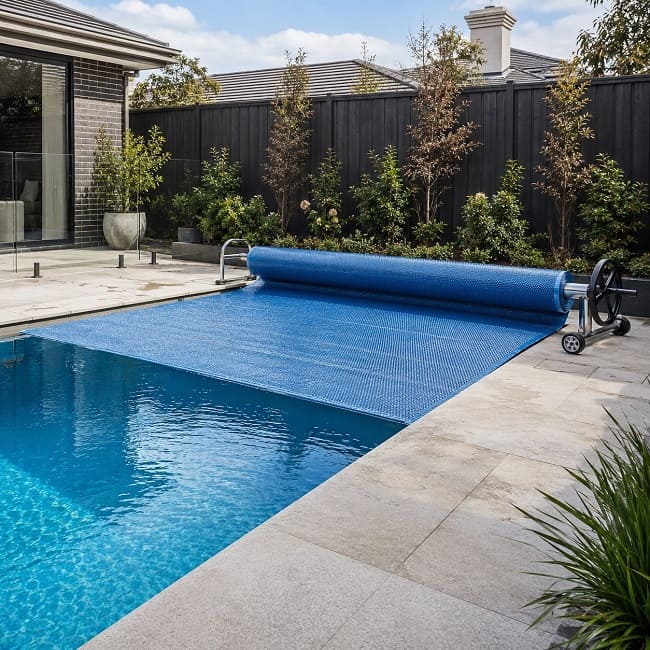

Practical solar blanket routine for Melbourne pools, not a generic heating article

The first part is easy: a solar blanket goes on with the bubble side down, sitting on the water, and the flat side facing the sky. The harder part is daily use. In Melbourne, the same blanket can be useful in shoulder season and excessive in a run of hot days if you keep covering by habit instead of by water temperature. This guide stays narrow on purpose: correct orientation, how to use pool blanket daily, when to uncover, how to avoid pool cover overheating water, and what changes when a normal warm week turns into a real heat event.

Quick answer: bubbles go down, flat side up

Correct orientation and why it matters

A solar blanket is designed to sit directly on the water with the bubbles facing down. That is the working position. It helps reduce evaporative heat loss and transfers solar gain into the pool more effectively. If the blanket is flipped the wrong way, it may still float, but it is not working properly and it is more likely to suffer heat stress over time.

Correct setup

Bubbles down. Flat side up. Let the blanket float on the surface. Do not suspend it above the water and do not leave it bunched high over the coping where hot air can sit under the edge.

Owners often get caught by one bad test: “it still looks fine upside down.” That is not the right question. The real question is whether the blanket is transferring heat to the water, limiting overnight loss and avoiding avoidable wear. Appearance alone does not answer that.

Small but common mistake: after trimming, cleaning or rolling the blanket off onto a reel, people put it back on flipped. If the blanket comes off often, check the orientation every time instead of assuming it is still correct.

How to use pool blanket daily in Melbourne

Use the blanket by condition, not by habit

The best solar blanket Melbourne routine is simple: cover when the pool needs to hold heat, uncover when the pool needs to lose heat or be used. Melbourne is exactly the sort of climate where that matters because a mild sunny afternoon can be followed by a cool night, while a run of hotter days can push the same pool beyond a comfortable swimming temperature.

Morning: if the pool is not being used and water is still below or around your preferred swim temperature, leave the blanket on. After a cool night, that is when it is doing its most useful work by cutting evaporation and holding overnight warmth.
Daytime in shoulder season or mild weather: keep the blanket on if your goal is to warm the pool. Run normal daytime circulation while the blanket is on so heat and chemistry do not sit still at the surface.
Before swimming: take the blanket off fully. Do not leave half of it floating at one end where it collects debris, drags in the wind or gets damaged by repeated bunching.
Evening and overnight: put the blanket back on once the swim is finished and the surface is clear. For most non-heatwave days in Melbourne, night cover is the highest-value part of the routine.
Use a thermometer, not just your hand

“Feels warm” is too vague once summer settles in. A simple floating or digital thermometer gives you a repeatable way to decide whether the blanket is helping hold useful warmth or trapping more heat than the pool needs.

That is the practical point many owners miss. A solar blanket is mainly a heat-retention tool. In the right conditions it also helps build warmth, but day to day it earns its value by stopping heat loss, especially overnight and on breezy evenings.

When to uncover the pool

The cover should come off for a reason

Good blanket use is not constant blanket use. There are clear situations where leaving it off is the better call.

  • When people are about to swim: remove the blanket fully rather than folding it back over part of the water.
  • When the pool has already reached your preferred swimming temperature: stop covering by routine alone.
  • When the water is drifting above comfortable swim temperature: uncover, especially overnight, to let the pool shed heat.
  • After a heavy chlorine dose, strong correction or recovery cleanup: give the pool time to circulate properly instead of trapping a still, warm layer under the blanket straight away.
  • During strong wind or poor fitment: fix the fit or remove the blanket instead of letting the edge flap, drag and wear prematurely.
  • When you need a full clean or brush: take it off so you can see the whole surface and work properly.
Practical rule: once the water is at the temperature you actually want to swim in, the blanket stops being a “keep heating” tool and becomes a “keep holding” tool. In very hot weather, even that holding function can be too much.

Pool cover overheating water: what actually causes it

Usually a routine problem, not a product problem

Pool cover overheating water usually happens when three things line up: the blanket stays on through a run of hot days, the pool is not being used enough to bleed heat off naturally, and the owner keeps following the same cover routine that worked earlier in the season. In other words, the blanket is still doing its job — just no longer in the conditions it was originally helping with.

The pattern to watch for

One hot afternoon is not usually the issue. The problem is stacked heat: hot day after hot day, plus warm nights, plus a covered pool that never really gets a chance to cool.

Signs your blanket routine is now adding more heat than you want:

  • The pool is still too warm late in the evening.
  • No one wants to swim because the water has lost its refreshing feel.
  • The pool has stayed covered through several hot days while use has been light.
  • You keep replacing the blanket because “that is what we always do,” even though comfort has already gone past the target.
  • The blanket comes off and a noticeable wave of trapped warmth hits you straight away.
Best first correction: remove the blanket overnight. If the water is still climbing during a genuine hot spell, leave it off through the hotter part of the next day as well, then re-check the temperature instead of guessing.

Shoulder season vs heatwave: do not run the same routine

This is the split that makes the article worth reading. In shoulder season, the blanket often solves a real problem: warm days followed by cooler nights and steady heat loss. In a heatwave, especially when hot nights give little relief, the same routine can push the pool past the temperature you actually want. A cover plan that works in October or November may be the wrong plan in the middle of a multi-day heat event.

Melbourne pool blanket routine by weather pattern
Weather pattern Cover plan Why this works
Shoulder season with sunny afternoons and cooler nights Keep the blanket on whenever the pool is not being used, especially overnight. The biggest gain comes from reducing overnight heat loss and evaporation.
Normal warm summer week Use the blanket day and night while the pool still needs warmth, but start checking actual water temperature rather than following a fixed habit. This keeps the pool comfortable without drifting into unnecessary heat retention.
Multi-day hot spell or heatwave Switch to temperature-led use. Remove the blanket overnight first. If water still keeps climbing, leave it off for the hotter part of the day too. The goal changes from heat retention to heat control.
Cool, windy evening Cover the pool once swimming and cleaning are finished. Wind accelerates evaporative heat loss, so the blanket becomes more valuable.
Shock dose, recovery cleanup, algae clearing or heavy chemistry adjustment Use the blanket more cautiously until the pool has circulated properly and the immediate treatment step is done. Still, warm water trapped under cover is not ideal straight after major correction work.
Weather pattern
Shoulder season with sunny afternoons and cooler nights
Cover plan
Keep the blanket on whenever the pool is not being used, especially overnight.
Why this works
The biggest gain comes from reducing overnight heat loss and evaporation.
Weather pattern
Normal warm summer week
Cover plan
Use the blanket day and night while the pool still needs warmth, but start checking actual water temperature rather than following a fixed habit.
Why this works
This keeps the pool comfortable without drifting into unnecessary heat retention.
Weather pattern
Multi-day hot spell or heatwave
Cover plan
Switch to temperature-led use. Remove the blanket overnight first. If water still keeps climbing, leave it off for the hotter part of the day too.
Why this works
The goal changes from heat retention to heat control.
Weather pattern
Cool, windy evening
Cover plan
Cover the pool once swimming and cleaning are finished.
Why this works
Wind accelerates evaporative heat loss, so the blanket becomes more valuable.
Weather pattern
Shock dose, recovery cleanup, algae clearing or heavy chemistry adjustment
Cover plan
Use the blanket more cautiously until the pool has circulated properly and the immediate treatment step is done.
Why this works
Still, warm water trapped under cover is not ideal straight after major correction work.
The Melbourne takeaway

In shoulder season, the blanket helps you keep hard-won warmth. In a heatwave, the same blanket may need to stay off longer than usual because the pool no longer needs help getting warmer.

Mistakes that shorten cover life or make the routine worse

Most problems come from handling, not from the product
  • Leaving the rolled blanket in direct sun with no protection: once it is off the pool, heat can build inside the rolled layers quickly and damage the material.
  • Using bubbles up: the blanket may still sit on the pool, but it is no longer working in the intended orientation.
  • Keeping the blanket on after the pool has already reached target temperature: this is how useful heat retention turns into excess heat.
  • Assuming one routine works from spring through peak summer: Melbourne weather does not stay that stable.
  • Poor fitment at the edges: a blanket that rides high, flaps in the wind or bunches repeatedly wears faster and performs worse.
  • Ignoring normal circulation while the cover is on: warm surface water and treated water should not just sit in one layer all day.
Simple operating rule: use the blanket to keep water where you want it, not to keep adding heat after comfort has already been reached.

FAQ

Bubble side down, directly on the water. Flat side faces up. That is the normal working orientation for a solar blanket.

Usually yes in shoulder season or when the pool still needs warmth. Once the pool is already at a comfortable swim temperature, daytime cover should be decided by actual temperature, not by routine alone.

On most normal Melbourne days, cover overnight when the pool is not being used. That is when the blanket most effectively reduces evaporative heat loss. During a hot spell, overnight uncovering is often the first cooling step.

Watch actual water temperature and stop covering automatically through a run of very hot days. Remove the blanket overnight first. If the pool still keeps gaining heat, leave it off through the hotter part of the day as well.

Yes. Shoulder season is mostly about holding warmth against cool nights. A heatwave is about preventing stacked heat from building up over several hot days and warm nights.

It is better to remove it fully. Partial cover tends to bunch, collect debris awkwardly and wear faster, especially when the wind catches the rolled or folded section.

Sources