Free chlorine
Shows the measurable sanitiser available in the water. A low result may be linked to insufficient production or dosing, sunlight, contamination, algae demand or short chlorinator runtime.

Litra PoolCare tests pool water on site with a digital photometer, records the main chemistry readings and checks them against the pool surface, sanitiser system and visible circulation conditions. Any balancing work is based on the measured water condition rather than the appearance of the pool alone.
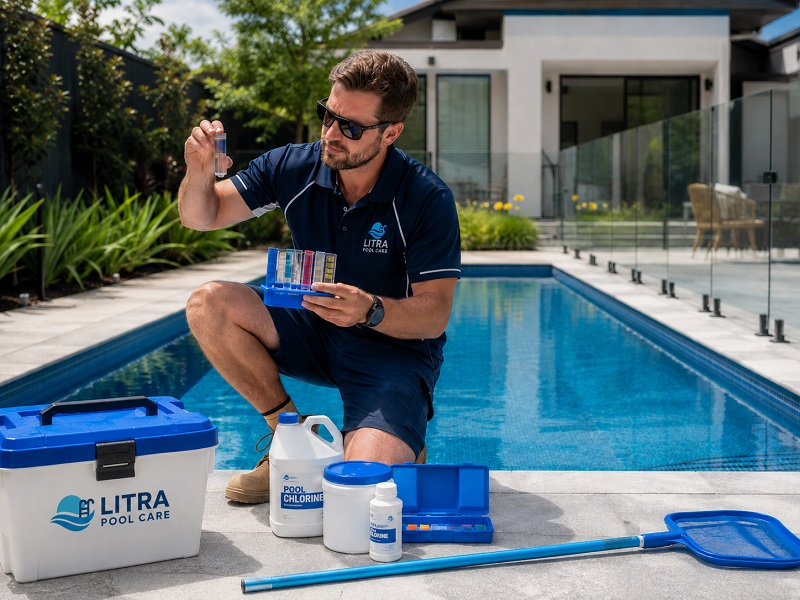
The readings are checked together because the same visible problem can have different causes. Low chlorine, cloudy water, scale or repeated pH movement cannot be diagnosed reliably from appearance alone.
Shows the measurable sanitiser available in the water. A low result may be linked to insufficient production or dosing, sunlight, contamination, algae demand or short chlorinator runtime.
Checked because pH affects chlorine behaviour, swimmer comfort, scale formation and the conditions experienced by pool surfaces and equipment.
Helps explain how strongly the water resists pH movement and is particularly relevant when pH repeatedly rises or falls between visits.
Stabiliser is measured in outdoor pools because it affects chlorine protection from sunlight and changes how a free-chlorine result should be interpreted.
Considered with pH, alkalinity, temperature and pool finish when scale, rough deposits or water-balance stability are being investigated.
Salt is checked on salt-chlorinated pools and compared with the operating range specified for the installed chlorinator.
For detailed stabiliser targets and the relationship between CYA and free chlorine, see the complete CYA and stabiliser guide.
The service record separates the measured water condition from the work carried out, so it is clear what was tested and what changed during the visit.
The relevant chemistry results measured during the visit are recorded for reference.
Where balancing forms part of the booked service, the record identifies the corrections carried out.
Products added during the visit can be itemised rather than grouped under a general water-treatment description.
Repeated chlorine loss, scale, unstable pH or a possible equipment problem is recorded separately from the immediate chemical correction.
Water appearance, circulation, chlorinator type, visible equipment condition and recent pool use are checked before the readings are interpreted.
Free chlorine, pH, alkalinity, CYA, calcium hardness and salt where relevant are tested using the appropriate pool-side equipment.
The readings are checked for sanitation problems, pH instability, stabiliser imbalance, scale risk or signs that circulation or chlorination may be contributing.
Where balancing is included in the booking, chemicals are added according to the measured condition and the agreed service scope.
Testing and service labour are kept separate from the cost of chemicals unless the confirmed quote or service package specifically states that chemical products are included.
The booked service covers the agreed pool-side assessment and testing. Where balancing is included, the correction is based on the readings taken during the visit.
For one-off or non-standard corrections, the amount of chemical required depends on the test results, pool volume and current condition.
One test shows the condition of the water at that moment. If the same problem returns after correction, the source of the change needs to be investigated rather than repeating the same dose.
Chlorine that repeatedly drops after correction can be associated with stabiliser conditions, contamination, algae demand, chlorinator output, operating time or circulation.
Read the CYA guideEstablished algae or heavy contamination can require debris removal, brushing, filtration work, sanitation treatment and follow-up testing rather than routine balancing alone.
View green pool recoveryScale that returns after correction can require a review of pH movement, alkalinity, calcium hardness, water temperature, topping-up water and pool surface conditions.
Request a water assessmentA salt chlorinator that is not producing correctly, restricted circulation or a filter problem can cause the water to drift even after the chemistry has been corrected.
Send equipment photosPhotos help separate a routine water-balancing visit from a green pool recovery job or a problem that may involve the circulation or chlorination equipment.
The right service depends on whether you need one measured check or ongoing control of water chemistry, cleaning and equipment condition.
Suitable after unusual water behaviour, a storm, a recent chemical correction, a change in pool use or when you want the current chemistry checked professionally.
More suitable when the pool needs recurring cleaning, testing, routine balancing and checks of accessible equipment instead of repeated standalone appointments.
The relevant panel can include free chlorine, pH, total alkalinity, cyanuric acid, calcium hardness and salt where a salt chlorination system is installed.
Chemicals are not assumed to be included unless the confirmed quote or service package specifically states that they are. For one-off or non-standard work, chemical products can be charged separately from the service visit.
Yes, where balancing forms part of the booked service and the required correction can reasonably be completed during that visit. Larger corrections may need staged treatment or follow-up testing.
Repeated chlorine loss can be linked to stabiliser conditions, contamination, algae demand, chlorinator output, operating time or circulation. A recurring pattern needs diagnosis rather than repeated dosing alone.
Testing is part of the diagnosis, but an established green pool can also require debris removal, brushing, filtration work, sanitation treatment and follow-up testing. See the green pool recovery service.
Yes. Use https://litrapoolcare.com.au/contact-us/ to send photos of the pool water, equipment pad, chlorinator display or visible problem area.
Send your suburb, a photo of the pool water and a photo of the equipment area. Litra PoolCare can confirm whether the likely next step is a water testing and balancing visit, green pool recovery or further investigation of the pool system.
 Cleaning
Maintenance
Skimmer
Filtration
Chlorine
Algae
Pump
Backwash
Vacuum
pH Level
Sanitizer
Brush
Debris
Water Test
Cleaning
Maintenance
Skimmer
Filtration
Chlorine
Algae
Pump
Backwash
Vacuum
pH Level
Sanitizer
Brush
Debris
Water Test
Cleaning
Maintenance
Skimmer
Filtration
Chlorine
Algae
Pump
Backwash
Vacuum
pH Level
Sanitizer
Brush
Debris
Water Test
Cleaning
Maintenance
Skimmer
Filtration
Chlorine
Algae
Pump
Backwash
Vacuum
pH Level
Sanitizer
Brush
Debris
Water Test