
Pool Equipment Upgrades in Melbourne
Upgrade ageing or underperforming pool equipment with a practical system review. Litra PoolCare helps Melbourne pool owners improve circulation, filtration, heating, chlorination, automation and visible equipment-pad layout so the pool is easier to run and more reliable through the season.
Quick answer: a pool equipment upgrade is useful when the current setup still works but is noisy, inefficient, difficult to service, unstable after weather changes, poorly matched to the filter or heater, or not giving the owner enough control. The upgrade should be selected around the whole pool system: pump, filter, chlorinator, heater, valves, plumbing, dosing equipment and daily usage.
Upgrade the system, not just one part
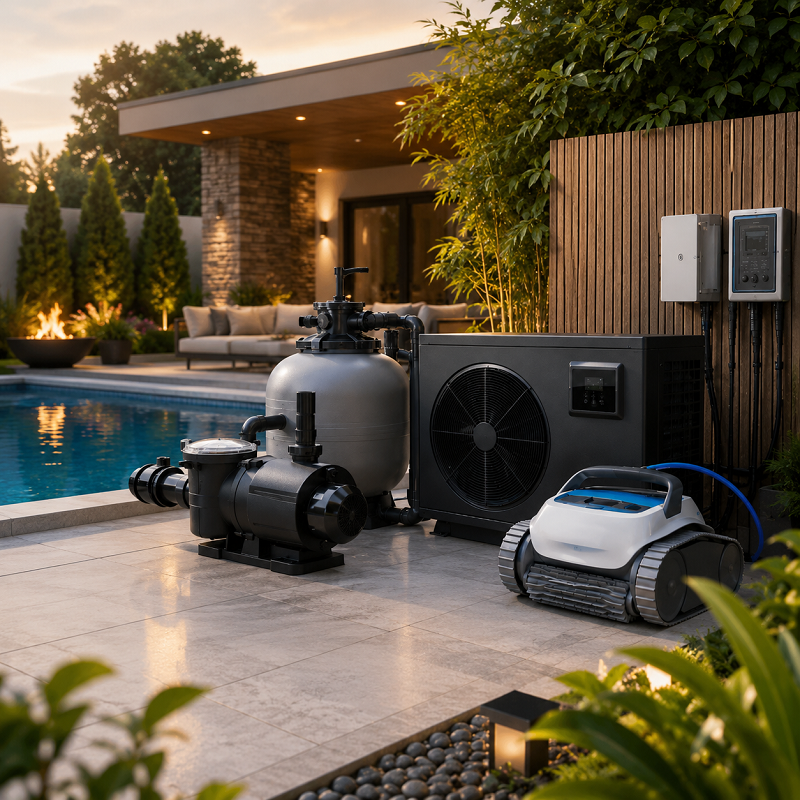
Pool equipment works as a chain. A new pump can change filter pressure, chlorinator flow and heater behaviour. A heating upgrade may need pump-speed changes or plumbing checks. Automation and dosing equipment only stay useful when sensors, feed points and circulation timing are reliable.
That is why an equipment upgrade should start with the installed system: what is failing, what is still suitable, what is limiting performance and what can be improved without overbuilding the equipment pad.
What can be upgraded on a pool equipment pad?
Most equipment upgrades work best when they are planned as a connected system. The aim is not simply to install newer parts; it is to improve water movement, filtration quality, heating reliability, chemical control and future service access.
Pump upgrades
Pump upgrades can include replacing an older single-speed pump, moving to a quieter variable-speed unit, correcting pump sizing and setting practical run modes for filtration, heating, cleaning and backwash.
Filtration upgrades
Filtration upgrades focus on clearer water, easier maintenance and better matching between pump output and filter capacity. This may include sand filter replacement, cartridge filter replacement, media changes, pressure-gauge review and access improvements.
Salt chlorinator upgrades
Salt chlorinator upgrades may involve a new cell, new control box or a complete matched chlorinator system. The correct choice depends on pool volume, pump runtime, filter flow, cell position, cable condition and output capacity.
Heating upgrades
Heating upgrades can include replacing an outdated heater, moving to an electric heat pump, improving heating flow, reviewing equipment-pad clearance and checking whether pump speed, bypass valves and pipework support reliable heating performance.
Automation and dosing upgrades
Automation and dosing upgrades can improve daily control, but they need correct sensor condition, flow-cell behaviour, dosing output, injection-point placement and controller logic. Good automation should reduce guesswork, not hide unstable chemistry behind a screen reading.
Visible plumbing upgrades
Visible plumbing upgrades deal with leaking unions, brittle exposed pipework, awkward valve positions, poor alignment, stressed fittings and equipment-pad layouts that make future servicing harder.
Upgrade or replacement: what is the difference?
Replacement usually solves a failed, leaking, noisy or unsupported piece of equipment. An upgrade goes further: it improves how the pool operates, how easy the system is to service and how much control the owner has over filtration, chlorination, heating or chemical dosing.
Replacement: the old part is no longer reliable, economical or compatible enough to keep.
Upgrade: the system can be made quieter, more efficient, easier to control or better matched to the pool.
Combined work: a pump, filter, chlorinator, heater or dosing unit can be replaced as part of a wider equipment-pad upgrade.
Not every upgrade is urgent: if the pool is stable and the current equipment is still suitable, the best option may be to wait or improve settings first.
Important: a stronger or newer piece of equipment is not automatically better. It still needs to match the pool volume, pipe size, filter capacity, heater requirements, chlorinator flow and the way the pool is used.
How Litra PoolCare plans an equipment upgrade
A useful upgrade starts with the installed system, not with a product brochure. We look at what the pool already has, what problem the owner wants to solve and whether the connected equipment can support the proposed change.
Check the current equipment pad
Pump, filter, chlorinator, heater, valves, visible pipework, dosing equipment, unions, clearance and access are reviewed as one connected system.
Identify the upgrade goal
The goal may be quieter running, better filtration, more stable salt output, easier heating, fewer manual chemical corrections, improved service access or preparation for future equipment.
Check compatibility before selecting equipment
The upgrade is checked against pool size, flow requirements, pipe direction, filter pressure, cell placement, heating demand, automation logic and available equipment-pad space.
Install, test and explain the setup
After installation, the system should be primed, checked for visible leaks, tested under normal operating conditions and explained so the owner knows what settings matter.
When an upgrade makes sense
The pump is loud, expensive to run, hard to prime or poorly matched to the filter.
The filter needs constant cleaning, has pressure problems or cannot keep the water clear after normal use.
The salt chlorinator needs repeated manual correction, has poor output or is no longer supported.
The heater or heat pump is unreliable, slow, inefficient or limited by poor flow.
The automation system is dosing incorrectly, drifting from real water tests or relying on old sensors.
The visible pipework has leaking unions, brittle fittings, awkward valves or poor equipment access.
Photos that help before an equipment upgrade quote
Clear photos make the first assessment faster and reduce guesswork before a site visit. The most useful photos show the whole system, not only the part that seems faulty.
One wide photo of the complete equipment pad.
Close photos of the pump, filter, chlorinator, heater, dosing unit and visible valves.
Readable model labels or product plates where available.
Photos of leaks, cracked fittings, tight pipework, error messages or unusual installation angles.
Related pool equipment services
If the job is closer to a direct replacement, start with the equipment replacement hub. If the issue is mainly settings, automation or variable-speed pump behaviour, the related service pages below may be the better starting point.
Pool equipment replacement
Main hub for replacing pumps, filters, salt systems, heaters, valves, dosing systems, covers and rollers.
Variable-speed pump setup and optimisation
Useful after installing a variable-speed pump or when the current schedule is noisy, expensive or not supporting heating/chlorination properly.
Pool automation and dosing pumps
For pH/ORP control, dosing pump behaviour, sensor checks, controller logic and post-installation tuning.
Pool heater and heat pump replacement
For outdated, unreliable or poorly flowing pool heating systems that need replacement or a heat pump upgrade.
Pool equipment upgrade FAQ
Can I upgrade only one piece of pool equipment?
Yes. A pump, filter, salt chlorinator, heater or dosing unit can be upgraded by itself if the rest of the system is suitable. The connected equipment still needs to be checked so the new part is not forced into a weak or mismatched setup.
Is a variable-speed pump always the best upgrade?
Often it is useful, but not automatically. The benefit depends on correct sizing, programming, pump schedule, filter condition, heater flow needs, chlorinator requirements and whether the pool still skims and circulates properly at lower speeds.
Can heating be upgraded without changing the pump?
Sometimes yes. Heating upgrades should still include a flow and pipework review because heaters and heat pumps need stable water movement. Some systems need pump speed changes, valve adjustment or visible plumbing improvement to support heating properly.
Do automation upgrades fix unstable water by themselves?
No. Automation is most useful when the basic pool system is already stable. Poor circulation, weak filtration, old sensors, wrong injection placement or poor controller settings can make automation less reliable instead of easier.
Should I upgrade before the equipment fails completely?
It can make sense when the existing equipment is already noisy, inefficient, unreliable or hard to service. Planned upgrades are usually easier to assess than urgent replacements after a breakdown during peak pool season.
Plan a pool equipment upgrade without guessing
Send photos of the current equipment pad and describe what you want to improve: noise, running cost, heating, filtration, chlorination, automation, dosing or service access. Litra PoolCare can review the visible setup and recommend the most practical next step.