

Pool Pump Motor Diagnostics for Humming, No-Start and Overheating Pumps
A pump that hums, will not start, overheats, cuts out after running or makes a sharp bearing noise should be checked before parts are replaced. The same symptom can come from a start problem, worn bearings, a jammed impeller, poor flow, heat damage or an electrical supply issue.
Litra PoolCare provides pool pump motor diagnostics in Melbourne for residential pool owners who need to understand whether the sensible next step is repair, bearing work, pump replacement or an electrician referral.
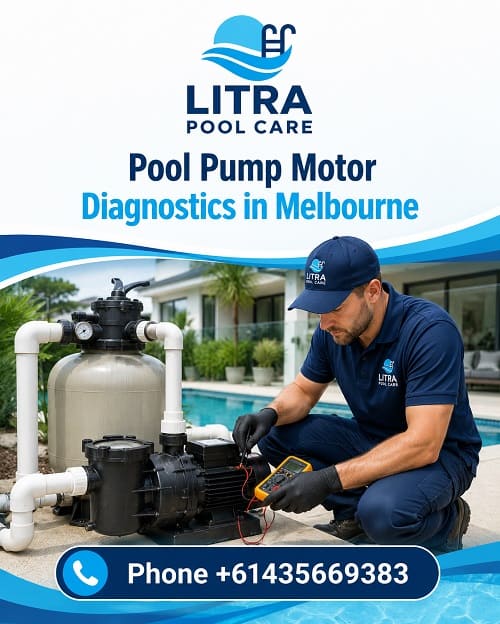
What gets checked first
The inspection starts with the pump and visible equipment area, then separates likely motor or start faults from bearing wear, flow restriction, heat stress and electrical issues that may need a licensed electrician.
Common pump motor symptoms we diagnose
Pool pump motor symptoms often overlap. A humming pump can be a start issue, but it can also happen when the shaft is tight or the impeller is restricted. Overheating can come from motor age, poor ventilation, a dirty basket, dirty filter, restricted valves, bearing drag or supply problems. The inspection looks for the most likely cause before money is spent on the wrong fix.
Humming pump
A hum without normal startup can mean the motor is energised but not rotating. Causes include a failed start component, tight shaft, jammed impeller, worn bearings or a supply-side issue.
Pump not starting
A silent pump is different from a humming pump. Controls, timers, switches, visible pump condition and possible supply faults need to be separated before assuming the motor is finished.
Overheating
Heat can come from poor airflow around the motor, hydraulic load, worn bearings, repeated failed starts, long runtime in poor conditions or electrical stress.
Intermittent shutdown
A pump that starts and later cuts out may be reaching thermal protection, struggling under load or responding to a control or supply problem. Run time before shutdown matters.
Bearing noise vs motor fault
Grinding, screaming or rough running often points to bearing wear. A motor/start fault is more likely when the pump hums, fails to rotate or shuts down after heating.
Capacitor symptoms
Capacitor-related symptoms can look like humming, slow starting, intermittent starting or repeated failed start attempts. The wider pump condition still needs to be checked.
What a humming pump can and cannot tell you
The motor may be energised but not rotating
When a pool pump hums but does not start properly, the motor may be receiving power but unable to turn. That can happen when the shaft is tight, the impeller is blocked, bearings are badly worn, a start component is failing or the pump is receiving poor supply.
A pump-side inspection checks visible conditions first: debris in the basket, signs of water leaks near the motor, rust or corrosion, abnormal heat, vibration, lid seal issues, poor flow and whether the noise changes when the pump tries to start.
Do not keep forcing restarts
Repeated start attempts can add heat and stress to the motor. If the pump hums, smells hot, trips, stops again after reset or becomes too hot to touch safely, leave it off and arrange inspection.
Pump not starting, overheating or shutting down intermittently
| Symptom | What it may indicate | Recommended next step |
|---|---|---|
| Pump hums but does not start | Start issue, tight shaft, jammed impeller, bearing drag, capacitor symptoms or possible supply problem. | Stop repeated start attempts and book pump-side diagnostics. |
| Pump is silent and does nothing | Control issue, timer/switch issue, failed motor, supply fault or protection device issue. | Check only safe visible items. Electrical supply faults may need a licensed electrician. |
| Pump starts, then shuts down | Thermal overload, poor ventilation, restricted flow, bearing drag, motor wear or supply-side issue. | Note how long it runs before stopping and whether it restarts after cooling. |
| Grinding, screaming or rough running | Bearing wear, shaft seal leak history, water damage, corrosion or internal mechanical wear. | Compare bearing repair cost against full pump replacement. |
| Hot smell or visible heat stress | Overheating, repeated failed starts, electrical stress, failing motor or unsafe operation. | Turn the pump off and arrange inspection before further use. |
Bearing noise vs motor start issue
Bearing noise and motor failure are often confused, but they lead to different decisions. A pump with noisy bearings may still move water. A pump with a start or motor fault may fail before the wet end can be properly assessed.
When it sounds like bearing wear
- Grinding, screaming or rough noise while the pump is running.
- Noise changes with speed, load or heat.
- Pump still moves water, but the motor sounds harsh.
- Water marks, corrosion or previous shaft seal leak near the motor.
If this matches your pump, see pool pump bearing replacement in Melbourne.
When it sounds more like a motor or start issue
- Humming without normal startup.
- Motor cuts out after heating up.
- Pump starts only sometimes.
- Silent no-start where controls or supply may be involved.
Motor-style symptoms need diagnosis before choosing repair or pool pump replacement.
Capacitor symptoms and start problems
A failing start component can make a pump look like the motor is dead, especially when the pump hums, struggles to start or starts only intermittently. The same behaviour can also come from a jammed impeller, tight shaft, worn bearings, age-related motor wear or an electrical supply issue.
Visible checks before blaming the motor
Some pump motor complaints are made worse by conditions around the equipment pad. These checks do not replace electrical testing, but they often explain why a motor is running hot, noisy or under load.
Flow restriction
A blocked basket, dirty filter, closed or partly closed valve, suction restriction or air leak can make the pump work harder and reduce cooling through normal water movement.
Leaks and seal marks
Water marks near the motor, rust, corrosion or shaft seal leak history can point toward bearing damage or motor deterioration rather than a simple start problem.
Airflow and heat
Poor ventilation, leaves packed around the motor, direct enclosure heat or repeated failed starts can raise motor temperature and trigger shutdown behaviour.
When a licensed electrician may be needed
Litra PoolCare can assess pump-side symptoms and visible equipment issues. Electrical supply faults, internal electrical repairs or circuit work may require a licensed electrician.
Within a pool equipment inspection
- Visible pump condition and operating behaviour.
- Noise, heat, vibration and start/stop pattern.
- Basket, lid, visible leaks and flow restriction signs.
- Repair vs replacement recommendation for the pool equipment side.
Escalate beyond pool-side work
- Suspected supply fault, circuit issue or unsafe electrical condition.
- Internal electrical repair inside the motor or control system.
- Hard-wired changes, circuit work or electrical compliance work.
- Repeated tripping where the cause is not safely isolated to the pump side.
Repair vs replacement recommendation
The recommendation should match the pump age, condition, parts availability and fault pattern. A low-cost repair is not good value if the motor is near end of life. Full replacement is not always required if the issue is isolated and the pump body is still worth keeping.
Repair may make sense when
The pump is otherwise in reasonable condition, the wet end is usable, the issue appears isolated and the repair cost is sensible compared with replacement.
Bearing work may make sense when
The main symptom is bearing noise, the motor still runs, corrosion is not severe and the pump has enough remaining value to justify overhaul.
Replacement may be better when
The motor is old, overheats repeatedly, has multiple symptoms, has poor efficiency, or repair cost is close to the price of a new pump.
What to send before a diagnostic visit
Clear photos and a short video can help narrow the likely issue before the visit and make the inspection more efficient.
Useful photos
- Pump label or model plate.
- Full equipment pad from a few steps back.
- Pump basket, lid, unions and visible leaks.
- Any rust, water marks or corrosion near the motor.
Useful video
- Short clip of the pump trying to start.
- Sound of humming, grinding or rough running.
- How long it runs before shutting down.
- Any controller, timer or error display visible nearby.
How a pool pump motor diagnostic visit works
Symptom review
We confirm when the issue happens, whether the pump hums, starts and stops, overheats, trips, loses prime or makes bearing-style noise.
Visible equipment check
The pump, basket, lid, unions, leaks, airflow, flow behaviour, vibration and nearby equipment are reviewed for signs that explain the symptom.
Likely cause
We separate likely motor or start problems from bearing noise, hydraulic restriction, pump-side defects and electrical supply concerns.
Recommendation
You receive a practical next step: repair, bearing replacement, pump replacement, broader equipment inspection or licensed electrician referral.
Related pool equipment services
If the diagnostic result points to another service, these pages explain the next step in more detail.
FAQ: Pool pump motor diagnostics
No. A humming pump usually means the motor may be energised but not rotating normally. Causes include a start component, tight shaft, jammed impeller, bearing wear or an electrical supply issue. Diagnosis is needed before choosing replacement.
Sometimes. Bearing replacement may be worthwhile if the pump is otherwise in good condition and the motor has not suffered severe corrosion, water damage or heat damage. If the pump is old or has multiple faults, replacement may be better value.
Stop forcing it to run. Intermittent shutdown can point to overheating, thermal overload, restricted airflow, hydraulic load, motor wear or a supply-side issue. The shutdown pattern should be checked before more runtime.
Litra PoolCare can assess pump-side symptoms and visible equipment issues. Electrical supply faults, internal electrical repairs or circuit work may require a licensed electrician.
Yes, especially when the symptom is unclear. A diagnostic check can prevent replacing a pump when the real issue is bearing wear, blocked flow, a start problem, visible equipment fault or an electrical supply issue.
Book pool pump motor diagnostics in Melbourne
If your pump is humming, not starting, overheating, shutting down intermittently or making a new motor noise, Litra PoolCare can inspect the pump-side symptoms and give a clear next-step recommendation.