

Pumps, filters, chlorination and pool heating
Pool equipment installation for Melbourne pools
Litra PoolCare installs new pool-side equipment and connects it to the existing circulation system. Before installation, the proposed unit is checked against the pool’s expected flow, filter operating range, visible pipework, valve layout, controller requirements and available service space. This helps avoid equipment that is unsuitable for the pump, filter, sanitising system, heating loop or available equipment area.
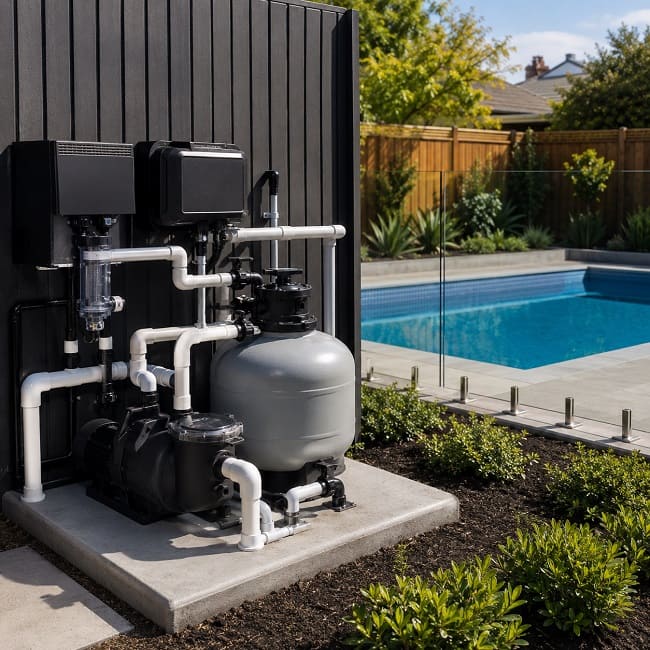
Equipment sales & supply with installation
Litra PoolCare can help select and supply suitable equipment as part of an installation job, subject to site and system checks. Equipment supply is quoted as part of the installation scope after compatibility, connection requirements and available space have been checked.
New installation or replacement of existing equipment?
A new installation adds equipment or introduces a new function. Replacement applies when an existing unit has failed, deteriorated, become unreliable, no longer suits the system or is no longer economical to repair.
Adding equipment to an existing pool
Examples include adding a salt chlorinator to a manually dosed pool, connecting heating for the first time or installing a new filtration arrangement.
The work may require new unions, changed valve positions, a revised return route, controller coordination or preparation for licensed electrical or gas work.
Request an equipment installation assessmentReplacing an existing unit
Replacement is not always a like-for-like connection. Newer models can have different flow requirements, union positions, controller needs, electrical loads or service clearances.
The replacement unit is checked against the existing plumbing, filter, valves, available space and connected equipment.
Pool equipment replacement MelbourneWhat is checked before installation
Motor power, filter diameter or heater output alone does not confirm compatibility. The proposed equipment must operate within the hydraulic, control and physical limits of the complete pool system.
Installation requirements by equipment type
Pumps, filters, chlorinators and heating equipment each have different connection and commissioning requirements. Choose the relevant installation service for equipment-specific details.
Pool pumps
Pump selection is based on the required flow and the resistance created by the filter, valves, pipework, chlorinator and heating equipment. A higher motor rating does not automatically produce better circulation.
Pool filters
The filter must operate within the manufacturer’s rated flow and pressure limits at the pump’s intended operating speeds. The layout also needs room for backwashing, cartridge removal, lid access and future valve service.
Salt chlorinators
Cell direction, controller position, minimum water flow, salt level and timer coordination are checked against the selected manufacturer’s requirements and the existing circulation system.
Heaters and heat pumps
The heating unit must receive stable water flow within its permitted range. Position, airflow, bypass arrangement, drainage and equipment order are confirmed for the selected model and site.
Valves and visible plumbing
Targeted plumbing changes may be required where connection heights, union sizes, flow direction or isolation requirements differ from the existing layout.
How the installation is planned
The work is planned around the selected equipment, the existing hydraulic system and the conditions at the equipment area.
Review the equipment area
Check wide photos, model labels, visible plumbing, valve positions, access and the reason for adding the equipment.
Confirm compatibility
Compare the proposed model with expected flow, filter limits, pipe size, controller requirements and manufacturer specifications.
Define the required work
Identify the equipment connection, unions, valves, visible PVC changes and any separate licensed trade requirements.
Install the pool-side components
Position and connect the equipment while retaining access to baskets, lids, cells, gauges and service panels.
Commission the system
Check priming, flow, pressure, valve position, visible leaks and basic operation of the connected equipment.
Set the initial operating plan
Establish practical starting settings for filtration, chlorination or heating and explain the initial checks the owner should make after installation.
Pool-side installation and licensed trade work
Pool plumbing, equipment positioning and commissioning are separate from electrical, gas and regulated refrigerant work.
Pool-side work may include
- inspection of the existing circulation path;
- equipment positioning and access planning;
- accessible unions and isolation valves;
- agreed visible PVC pipework changes;
- pump priming, pressure and flow checks;
- basic controller and operating setup;
- visible leak checks after commissioning.
Separate licensed or specialist work may include
- new electrical circuits, fixed wiring or switchboard changes;
- electrical fault investigation;
- gas supply, appliance connection, alteration or flue work;
- work involving regulated refrigerant that could cause refrigerant leakage;
- structural, drainage or building work outside the agreed pool-equipment scope.
Electrical installation work in Victoria must be arranged through a Registered Electrical Contractor and completed by an appropriately licensed electrical worker; a Certificate of Electrical Safety is required for electrical installation work. Gas installation, connection or alteration must be completed by a suitably licensed gasfitter. Work involving regulated refrigerant that could cause leakage requires the appropriate Refrigerant Handling Licence.
Modernisation and crowded equipment pads
Some equipment areas need a broader review rather than one isolated installation. This is common where previous changes have created poor access, confusing valves or unnecessary plumbing restrictions.
When a broader equipment plan may be needed
When the existing fault should be diagnosed first
New equipment should not be selected simply to solve an unexplained flow, pressure, leak or control problem. If the failed component is uncertain, diagnose the system before choosing repair, replacement or a new installation.
Where the faulty component has not been confirmed, begin with pool equipment inspection and repair. If an existing unit is known to need replacement, use pool equipment replacement.
What to send before booking
One wide photo of the complete equipment area is usually more useful than several close-ups without the surrounding pipework and valves.
Equipment-area photos
- the full equipment pad from a few steps back;
- the pump, filter, chlorinator and heating equipment together;
- all visible valves, unions and pipe directions;
- available floor and wall space;
- nearby fences, gates, drainage points and access paths.
Model and pool details
- pump, filter, chlorinator and heater model labels;
- filter pressure-gauge reading;
- error codes or controller messages;
- Melbourne suburb and approximate pool volume;
- the equipment you want to add;
- whether the equipment has already been purchased.
Photos can show the likely connection path and access constraints, but they may not confirm internal valve condition, actual flow, electrical capacity or hidden pipe restrictions. An on-site check may still be required.
Related pool equipment services
Pool equipment installation FAQ
Can several items be installed during the same job?
Yes, where the equipment, available space and trade requirements allow it. Planning connected items together helps maintain correct flow direction, valve access and future service space.
Can compatibility be confirmed from photos?
Photos can identify model numbers, visible plumbing, valve positions and access problems. They cannot always confirm actual flow, electrical capacity, internal valve condition or hidden restrictions.
Does new equipment always require new plumbing?
No. Existing visible plumbing may be reused when it is correctly sized, in suitable condition and compatible with the new equipment.
What if the existing equipment is already faulty?
If an existing unit is known to need replacement, use pool equipment replacement. If the cause of the problem is uncertain, begin with pool equipment inspection and repair.
Send a wide photo of the equipment pad, clear model labels, the Melbourne suburb and a short description of the equipment you want to add. Litra PoolCare can review the likely connection work, compatibility, service access and any separate trade requirements.